advertisements
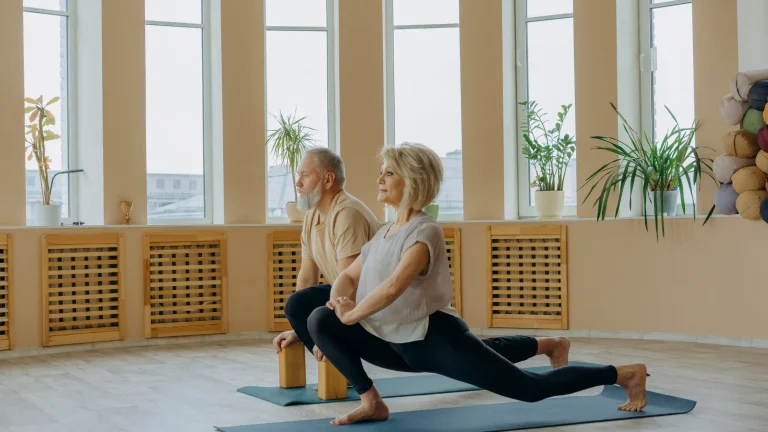
When you use short movement blocks in yoga for seniors, you break strength-building practice into focused, manageable segments of five to fifteen minutes.
Building muscle and stability after 60 does not require surviving a grueling, hour-long fitness class.
In fact, long sessions often lead to fatigue, compromised joint alignment, and prolonged soreness that can derail a weekly routine.
This approach respects recovery needs while providing enough muscular tension to stimulate real physical adaptation.
Key Takeaways
- Consistency beats duration: Three 10-minute yoga sessions spread across the week often produce better strength retention than a single 45-minute class.
- Targeted tension builds muscle: Holding foundational poses with proper alignment activates major muscle groups without straining sensitive joints.
- Lower barrier to entry: Short blocks eliminate the mental friction of clearing an hour on your calendar, making daily practice realistic.
- Built-in recovery: Micro-sessions prevent neuromuscular fatigue, keeping your balance and form sharp from start to finish.
Why Traditional Hour-Long Yoga Classes Can Hold Seniors Back
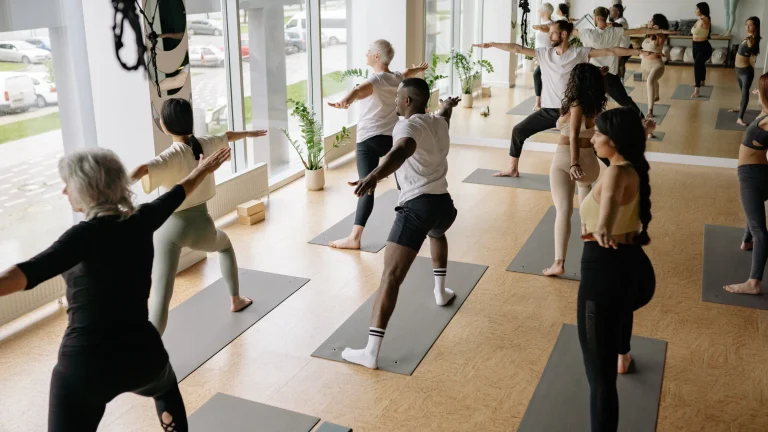
Standard studio yoga classes typically run 60 to 75 minutes. While that format works well for younger practitioners or seasoned athletes, it frequently creates unnecessary hurdles for older adults focusing on functional strength.
As we age, muscles and connective tissues require slightly longer recovery periods between bouts of sustained effort.
Toward the end of a 60-minute class, tired stabilizing muscles around the hips, ankles, and shoulders begin to give out.
Instead of building strength during those final twenty minutes, practitioners often compensate with poor posture or lock out their joints to stay upright.
Furthermore, a long session can trigger delayed onset muscle soreness or general exhaustion that lasts for days.
When a workout leaves you feeling depleted rather than energized, you are far less likely to unroll your mat again the next day.
++ Explore Faster-Paced Sequences in Yoga for Seniors Safely
Short movement blocks solve this problem by stopping the session while your form is still strong and your energy reserves remain intact.

How Short Movement Blocks Build Functional Strength
Muscle strength improves when fibers experience progressive mechanical tension followed by adequate rest.
You do not need heavy dumbbells or marathon workouts to trigger this response.
Bodyweight resistance, isometric holds, and controlled transitions in yoga generate substantial muscular demand—especially when performed with full concentration.
According to the Centers for Disease Control and Prevention (CDC), adults aged 65 and older need muscle-strengthening activities that work all major muscle groups at least two days a week.
Research on exercise “snacks” and accumulated physical activity consistently shows that shorter bouts of movement distributed throughout the day offer comparable cardiovascular and musculoskeletal benefits to continuous exercise.
When you practice in focused 10-minute blocks, you can devote 100% of your attention to engaging the right muscles.
Instead of rushing through thirty poses, you might spend your entire block mastering three or four foundational postures, resting briefly between sets just as you would in a traditional strength-training program.
Comparing Short Movement Blocks vs. Traditional Yoga Sessions
Understanding how micro-sessions differ from conventional classes helps you structure your weekly routine effectively.
Read more: Adapt Chair Sequences for Yoga for Seniors With Less Floor Work
| Feature | Short Movement Blocks (5–15 Minutes) | Traditional Classes (60+ Minutes) |
| Primary Focus | Targeted muscular engagement and crisp form | Full-body flow, endurance, and deep relaxation |
| Fatigue Risk | Low; stops before stabilizer muscles tire out | Moderate to high in the final third of class |
| Joint Stress | Minimal, due to shorter cumulative load | Higher risk of joint compression when tired |
| Schedule Flexibility | Fits easily between daily errands or morning routines | Requires dedicated travel or scheduling blocks |
| Weekly Frequency | Easily practiced 4 to 6 times per week | Typically practiced 1 to 2 times per week |
Three Practical Short Movement Blocks for Senior Strength
You can rotate these three 10-minute routines throughout your week. Keep a sturdy, armless chair or a clear wall nearby for balance support whenever needed.
++ Explore Stillness Before Screens With Morning Meditation Daily
Move slowly, breathe steadily without holding your breath, and stop immediately if you feel sharp joint pain.
Block 1: Lower-Body and Hip Stability (10 Minutes)
Strong legs and hips protect your knees, support your lower back, and reduce fall risk.
The National Institute on Aging (NIA) emphasizes that lower-body strength exercises directly improve balance and everyday mobility, such as climbing stairs or standing up from a low chair.
Seated-to-Standing Chair Flows (3 minutes): Sit near the front edge of a sturdy chair with feet hip-width apart. Press through your heels to stand tall, reaching your arms overhead on an inhale.
Exhale as you hinge at the hips and slowly lower back to the seat without plopping down. Repeat 6 to 8 times at a slow, controlled pace.
Supported High Lunge Holds (4 minutes): Stand facing the back of your chair with hands resting lightly on the top rail.
Step your left foot back about three feet, keeping your back heel lifted and front knee stacked directly over your ankle.
Sink slightly into your hips until you feel your front thigh and glutes engage. Hold for 5 slow breaths, step forward, and switch sides. Complete two rounds per leg.

Heel Raises with Wall Support (3 minutes): Place your fingertips on a wall at shoulder height.
Slowly rise onto the balls of your feet over a count of three, pause at the top for two seconds, and lower your heels over a count of three. Perform 10 to 12 repetitions to strengthen your calves and ankles.
Block 2: Upper-Body and Posture Strength (10 Minutes)
Rounding shoulders and upper-back weakness often develop from sitting or looking down at screens. This block targets the chest, shoulders, triceps, and spinal extensors.
Wall Plank Push-Ups (4 minutes): Stand an arm’s length away from a sturdy wall and place your palms flat against it at shoulder height.
Engage your abdominal muscles so your body forms a straight line from head to heels.
Bend your elbows slowly to bring your chest toward the wall, then press back to the starting position. Complete 2 sets of 8 to 10 repetitions.
Locust Pose Variations (3 minutes): Lie face down on a cushioned mat with your arms alongside your body, palms facing down.
On an inhale, gently lift your chest, hands, and feet an inch or two off the floor, squeezing your shoulder blades together. Hold for 3 breaths, lower down, and rest. Repeat 4 times.
Seated Cactus Arm Squeezes (3 minutes): Sit tall in a chair with your feet flat on the floor. Raise your arms to shoulder height with elbows bent at 90 degrees, palms facing forward.
Inhale to draw your elbows slightly back, squeezing the muscles between your shoulder blades, then exhale to return to center. Perform 10 slow repetitions.
Block 3: Core Control and Balance Integration (10 Minutes)
A resilient core stabilizes your spine during every reach, twist, and step you take.
Bird-Dog on Hands and Knees or Chair (4 minutes): Start on all fours on a padded mat—or stand facing a chair seat with hands planted firmly under your shoulders. Extend your right leg straight back while keeping your hips level.
If steady, reach your left arm forward. Hold for 3 breaths, return to start, and switch sides. Repeat 4 times per side.
eated Boat Pose Hold (3 minutes): Sit near the front edge of your chair and hold the sides of the seat for support. Lean your torso back slightly with a flat back until you feel your abdominal muscles tighten.
Lift one foot two inches off the floor for 5 breaths, lower it, and switch feet. Repeat twice per side.
Tree Pose at the Wall (3 minutes): Stand with one side near a wall. Shift your weight onto your outside leg and place the sole of your inside foot against your opposite ankle or calf (avoiding the knee joint).
Press your standing foot firmly into the floor and lengthen your spine. Hold for 5 to 8 breaths per side.
Safety Tips Before You Start
While short yoga blocks are gentle on the body, proper preparation ensures safe progress:
Consult a healthcare provider first: If you have osteoporosis, recent joint replacements, uncontrolled high blood pressure, or severe balance disorders, ask your doctor or physical therapist which poses to modify.
Prioritize breath over depth: Never hold your breath to hold a pose longer. Smooth, steady breathing keeps blood pressure stable and prevents unnecessary muscle tension.
Use props generously: Yoga blocks, folded blankets, walls, and chairs are tools for better leverage and safety, not signs of weakness.
Conclusion
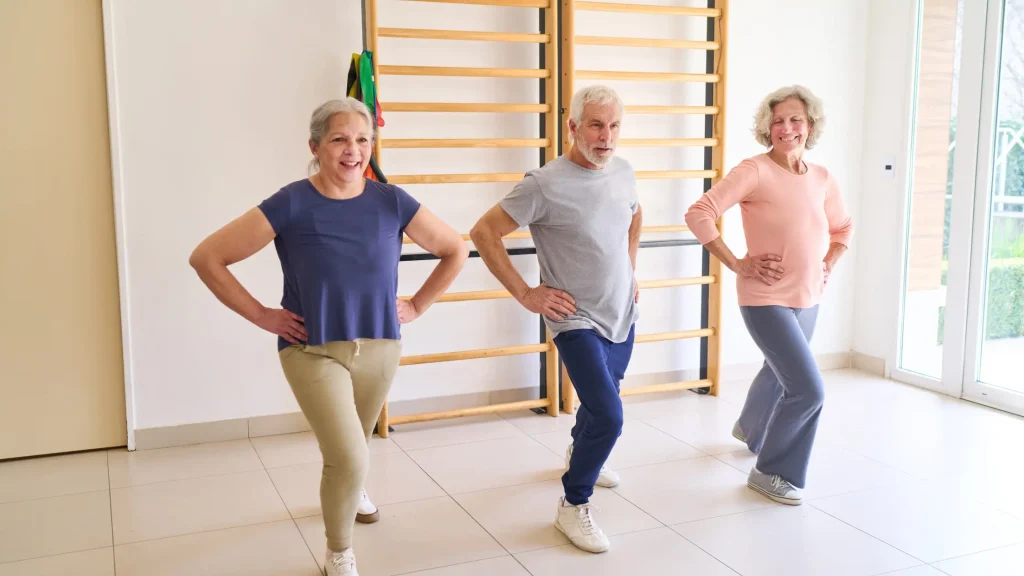
You do not need an hour of free time or high endurance to get stronger after 60.
When you use short movement blocks in yoga for seniors, you build sustainable strength, protect your joints from fatigue, and make daily movement a habit you actually look forward to.
Start by picking just one 10-minute block from this guide, set a timer for tomorrow morning, and focus on slow, steady control.
Frequently Asked Questions
How many short yoga blocks should a senior do per week?
Aim for three to five 10-minute blocks spread across the week. Practicing every other day gives your muscles 24 to 48 hours to repair and grow stronger while keeping the routine easy to maintain.
Can short yoga sessions really build muscle without weights?
Yes. Holding isometric poses and moving slowly through bodyweight transitions creates mechanical tension in muscle fibers.
For older adults, consistent bodyweight resistance is an effective, low-impact way to maintain and build functional muscle mass.
What is the best time of day for seniors to do a short yoga block?
The best time is whenever your energy feels steadiest and your joints feel warmed up.
Many older adults prefer late morning after a light breakfast and a short walk, while others use a 10-minute afternoon block to relieve stiffness from sitting.
Should I stretch or strengthen first in a 10-minute block?
Begin with gentle, dynamic movements—such as slow chair-to-stand transitions or arm circles—to warm up your joints, then move into strength-building holds.
Save deep, passive stretching for the very end of your block once your muscles are thoroughly warm.
++ 101 Ways To Use Yoga Blocks: Beginner to Advanced
++ 9 Yoga Poses for Seniors: Gentle Moves for Strength, Balance, and Flexibility