anúncios
Try open-eye awareness during morning meditation if you struggle with heavy eyelids or mental fog right after waking up.
Sitting down to meditate first thing in the morning often triggers an unexpected obstacle: drowsiness.
When you close your eyes shortly after getting out of bed, your brain frequently interprets the darkness and stillness as a cue to drift back to sleep rather than stay alert, whereas keeping a soft gaze helps cultivate calm focus without losing alertness.
Keeping your eyes softly open bridges the gap between formal mindfulness and daily life.
Instead of retreating into an internal sensory vacuum, you train your mind to remain steady while engaging with your immediate physical environment.
This straightforward adjustment makes it easier to transition smoothly from your meditation cushion into a busy workday.
Principais conclusões
- Prevent Morning Drowsiness: Letting natural light enter your visual field signals wakefulness to your brain, reducing the urge to nod off shortly after waking.
- Anchor Attention Externally: Resting a soft, unfocused gaze on a neutral spot helps stabilize wandering thoughts without requiring intense visual concentration.
- Support Smooth Transitions: Practicing mindfulness with open eyes makes it easier to carry calm awareness directly into everyday tasks like reading, working, or talking.
- Protect Eye Comfort: Blinking naturally and choosing a low-glare focal point prevents eye strain and dryness during longer sessions.
Why Should You Meditate With Your Eyes Open in the Morning?
Most beginner meditation apps instruct you to close your eyes immediately. While closing your eyes blocks out visual distractions, it also removes a primary sensory anchor that keeps the nervous system awake.
Early in the morning, lingering sleep inertia makes closed-eye stillness feel indistinguishable from a nap.
Open-eye meditation has deep roots in traditional contemplative practices, including Zen Buddhism (Zazen) and Tibetan mindfulness traditions.
In these approaches, practitioners keep their eyes half-open to maintain clarity, presence, and connection with the world around them.
De acordo com o Centro Nacional de Saúde Complementar e Integrativa (NCCIH), mindfulness practices focus on training attention and awareness in the present moment, and posture or gaze adjustments can support that stability depending on individual needs.
Fighting Sleep Inertia After Waking
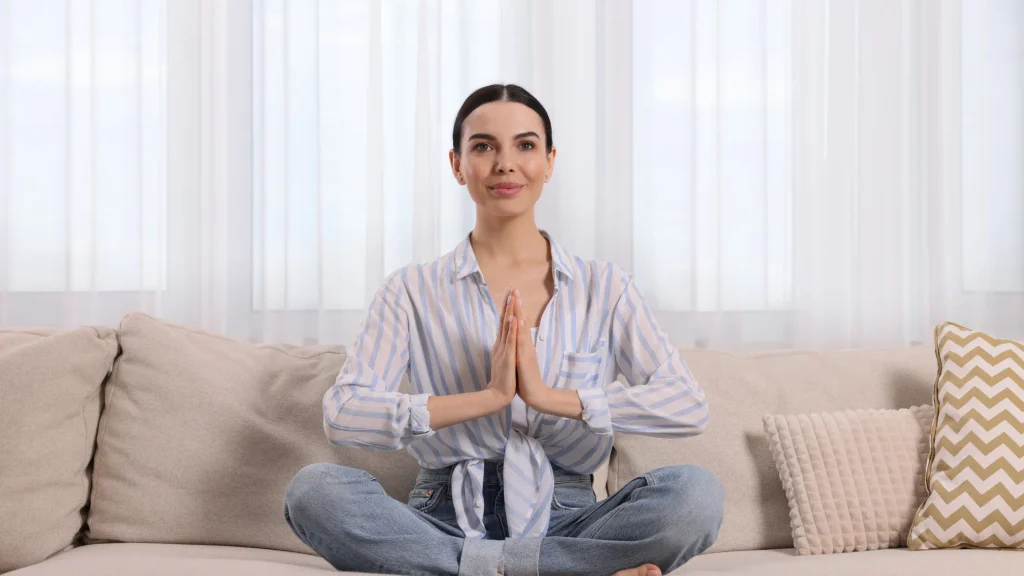
When morning light hits the retina, specialized photoreceptors send signals to the brain’s circadian clock to suppress melatonin and promote alertness.
++ Explore a quietude diante das telas com a meditação matinal diária.
Closing your eyes in a dim bedroom interrupts this natural wake-up signal. By keeping your eyes open in a softly lit room, you work with your biology rather than against it.
Bridging Cushion Practice and Daily Life
Life does not happen with your eyes closed. If you only practice mindfulness in total darkness and silence, maintaining composure in front of a bright computer screen or during a hectic commute becomes much harder.
Leia mais: Combine a luz do nascer do sol com a meditação matinal para um começo de dia mais tranquilo.
Open-eye practice trains your brain to stay grounded even when visual information is present.
Open-Eye vs. Closed-Eye Morning Meditation
Choosing whether to keep your eyes open or closed depends on your energy levels, your home environment, and what your mind needs on a given morning.
++ Torne a micro-recuperação possível com meditação no local de trabalho.
Both methods build present-moment awareness, though they engage your senses differently.
| Recurso | Open-Eye Awareness | Closed-Eye Meditation |
| Nível de alerta | High; natural light helps counter morning grogginess | Low to moderate; can trigger drowsiness right after waking |
| Primary Sensory Anchor | Soft visual gaze, breath, and posture | Breath, bodily sensations, and internal sounds |
| Main Distraction Risk | Visual clutter or movement in the room | Daydreaming, vivid mental imagery, or falling asleep |
| Best Home Environment | A tidy corner facing a blank wall or floor | Any quiet space, even with visual clutter nearby |
| Carryover to Daily Tasks | Seamless transition into screen work and conversations | Requires a brief readjustment period when opening eyes |
How Do You Practice Open-Eye Awareness at Home?
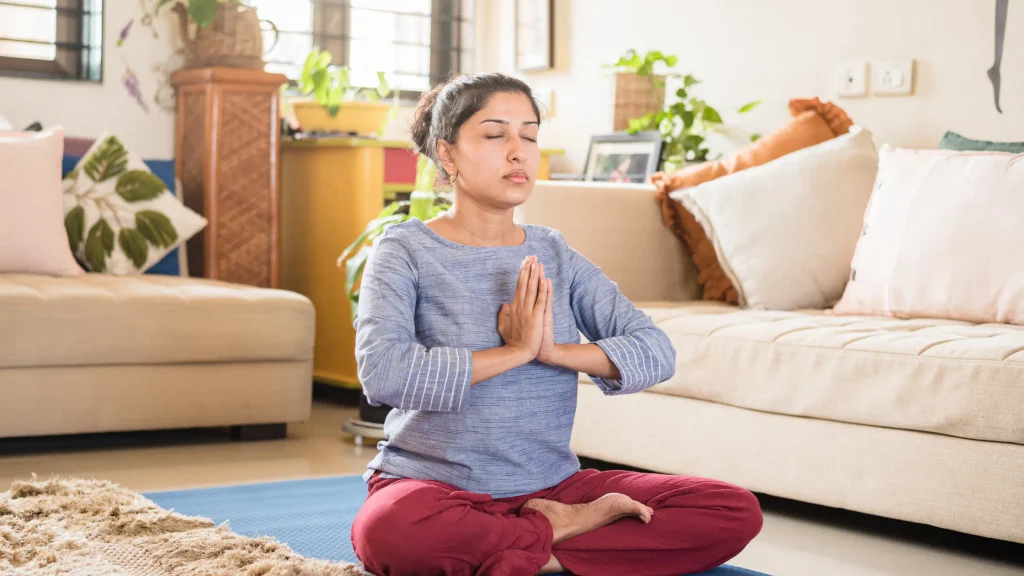
You do not need special equipment or a dedicated meditation room to try open-eye meditation.
A quiet chair or cushion and an uncluttered sightline are enough to get started. Follow these steps during your next morning session.
Choose an Uncluttered Direction: Sit facing a blank wall, a plain curtain, or an empty patch of floor.
Avoid facing a window with harsh direct sunlight, a television screen, or a messy desk that invites problem-solving thoughts.
Settle Into an Upright Posture: Sit comfortably on a chair with your feet flat on the floor, or on a cushion with your hips slightly elevated above your knees. Keep your spine tall without straining your lower back.
Lower Your Gaze at a 45-Degree Angle: Rather than staring straight ahead at eye level, let your gaze rest downward at roughly a 45-degree angle, about three to six feet in front of you.
Soften Your Focus: Relax the muscles around your eyes and forehead. Instead of locking onto specific details, allow your peripheral vision to widen so you take in the visual field gently without analyzing what you see.
Blink Naturally and Return to the Breath: Let your eyelids blink whenever they need to. Pair this relaxed gaze with the physical sensation of breathing, using both as steady anchors whenever your mind drifts into planning your day.
Common Mistakes to Avoid With Open-Eye Meditation
Switching from closed eyes to open eyes feels unfamiliar at first. Recognizing a few common pitfalls will help you adjust comfortably without straining your eyes or losing focus.
Staring Too Hard at One Spot
A soft gaze is very different from a fixed stare. If you lock your eyes rigidly onto a speck on the wall, your eye muscles will fatigue quickly and you may forget to blink.
Think of your gaze as receptive rather than investigative—light is simply entering your eyes while your attention rests with your breath.
Sitting in Front of Visual Triggers
Looking directly at your phone, an overflowing laundry basket, or a stack of unpaid bills pulls your brain into task mode.
If your living space is busy, position your chair facing a neutral corner or a plain wooden door. Removing visual reminders of your to-do list makes it far easier to stay present.
Forcing Your Eyes Open When Dry or Irritated
If you wear contact lenses, have dry eyes, or experience eye strain from allergies, forcing your eyes wide open will create unnecessary discomfort.
Keep your eyelids lowered halfway, blink regularly, or alternate between open and closed eyes during a single session. Comfort and sustainability matter more than strict posture rules.
When Should You Switch Back to Closed Eyes?
Open-eye awareness is a practical tool, not a rigid rule. Certain situations call for closing your eyes instead.
If you wake up feeling overstimulated, anxious, or visually overwhelmed, gently closing your eyes can reduce sensory input and help calm your nervous system.
You can also blend both approaches within a ten-minute session. Start with your eyes open for the first five minutes to shake off morning grogginess and establish clear posture.
Once your mind feels awake and steady, lower your eyelids for the final five minutes if you want to deepen internal focus.
Pesquisas destacadas por Associação Americana de Psicologia (APA) notes that consistent mindfulness practice supports attention regulation and stress reduction, regardless of minor stylistic variations.
Conclusão
Practicing open-eye awareness during morning meditation offers a simple, effective way to stay awake, grounded, and clear-headed before your day begins.
By resting a soft gaze on a neutral spot in your home, you prevent early morning drowsiness and train your mind to remain calm amidst real-world surroundings.
Tomorrow morning, set a timer for five minutes, sit facing an uncluttered wall, and experiment with a relaxed downward gaze.
Perguntas frequentes
Is meditating with your eyes open just as effective as closing them?
Yes. Both open-eye and closed-eye meditation train the same core skills of present-moment attention and non-judgmental awareness.
Many traditional meditation styles use open eyes specifically to build alertness and integrate mindfulness into everyday life.
How wide should my eyes be during open-eye meditation?
Keep your eyes naturally open or slightly lowered, about halfway to three-quarters open.
Avoid squinting or opening them unnaturally wide, and let yourself blink normally throughout the session so your eyes stay comfortable.
What should I look at when meditating at home?
Look toward a neutral, stationary surface such as a blank wall, a plain rug, or the floor a few feet ahead of you.
Choose a spot free of bright glare, moving objects, or reminders of household chores.
What if I get distracted by things in my room?
Noticing visual distractions is a normal part of the practice.
When your attention latches onto an object in the room, simply acknowledge that you are looking at it, soften your focus back into peripheral awareness, and return your attention to your breathing.