publicités
Quand vous use interval-style flows in yoga for seniors for more stamina, you bridge that gap without forcing a compromise.
This approach merges steady cardiovascular conditioning with restorative breathwork, building durable energy without joint stress or exhaustion.
As we age, maintaining physical endurance often feels like trying to hold onto water—it slips away faster than we expect.
Traditional low-impact routines can start to feel monotonous, yet jumping into high-intensity interval training (HIIT) carries real risk for aging joints.
Recent clinical research shows that pairing brief movement surges with active recovery significantly improves aerobic capacity and functional mobility in older adults.
Instead of chasing maximum heart rate spikes, interval yoga alternates between dynamic posture sequences and grounding resting poses.
The result? A heart that conditions itself efficiently while cortisol levels stay balanced and bone density remains protected.
Points clés à retenir :
- Cardiovascular Efficiency: Alternating movement paces strengthens the heart without the joint impact of high-intensity workouts.
- Functional Endurance: Dynamic flow intervals build energy reserves specifically needed for everyday senior mobility.
- Safe Exercise Structure: Pairing energetic sequences directly with supportive recovery poses prevents physical burnout and injury.
- Customizable Pacing: Modifiable interval ratios allow practitioners at any fitness level to progress safely over time.
What Are Interval-Style Flows in Senior Yoga?
Interval-style yoga flows adapt high-intensity interval training principles into gentle, low-impact sequences tailored for older bodies.
Instead of sprinting or jumping, you cycle through moderate dynamic movements followed by brief periods of mindful static recovery.
This continuous cycle elevates the heart rate safely during active phases and allows it to settle during breath-focused intervals.
Practitioners gain cardiovascular benefits comparable to a brisk walk or a steady ride on a stationary bike, all while refining balance and spinal alignment on the mat.
Unlike rigid gym protocols, yoga intervals prioritize joint mechanics and respiratory rhythm over sheer velocity.
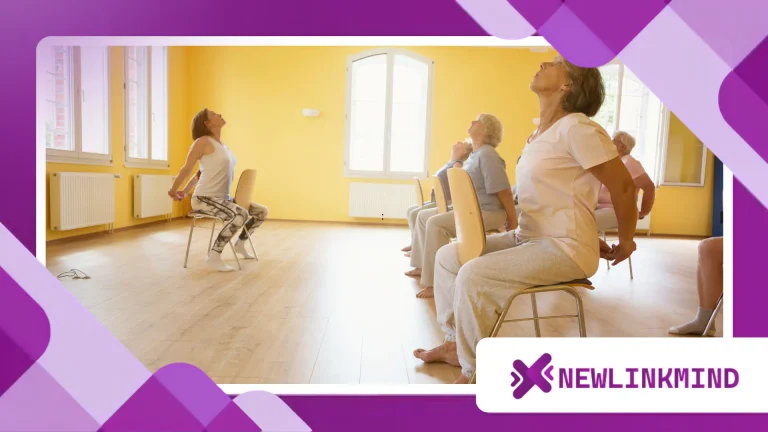
++ Adapter les séquences de yoga sur chaise pour les seniors avec moins d'exercices au sol
You move fluidly between standing or chair-supported flows and anchoring postures like Mountain Pose (Tadasana) or supported Child’s Pose (Balasana).
Why Should Seniors Use Interval-Style Flows for More Stamina?
Stamina in later years isn’t about running marathons—it’s about having enough vitality to get through the afternoon without feeling drained.
Static holdings build localized muscle endurance, but they rarely challenge the heart enough to expand your overall energy envelope.
Alternating between active posture sequences and deliberate rest triggers adaptive cardiovascular conditioning.
The heart adapts to shifting demands, quietly improving stroke volume and oxygen delivery to tired tissues.
According to clinical studies published by the Instituts nationaux de la santé, regular low-impact exercise routines that incorporate variable effort levels markedly enhance functional capacity and lower cardiovascular risk markers in older adults.
Increasing oxygen demand during active phases trains your body to recover faster, making daily tasks—like carrying groceries or climbing stairs—feel noticeably lighter.
How Do You Structure an Effective Interval Yoga Routine for Seniors?
Structuring a safe interval flow comes down to balancing work periods with restorative breathing.
The ratio of active effort to recovery should always reflect joint comfort and daily energy levels rather than a rigid timer.
A standard starting framework utilizes a 1:1 or 1:2 work-to-rest ratio.
En savoir plus: Restez actif cet hiver grâce à la pratique du yoga pour les seniors
Starting with 30 seconds of dynamic movement followed by 60 seconds of conscious recovery gives the nervous system room to adapt before shifting toward equal intervals.
| Composant | Domaine d'intervention | Sample Exercises / Poses | Durée recommandée |
| Warm-Up | Joint Lubrication & Spinal Mobility | Cat-Cow, Gentle Torso Circles, Ankle Pumps | 5 à 8 minutes |
| Active Interval | Dynamic Flow & Large Muscle Engagement | Chair Warrior II Flow, Dynamic Sun Salutations, Gentle Marching Mountain | 30–60 Seconds |
| Recovery Interval | Breath Regulation & Postural Alignment | Mountain Pose with Deep Diaphragmatic Breath, Supported Tree Pose | 30–60 Seconds |
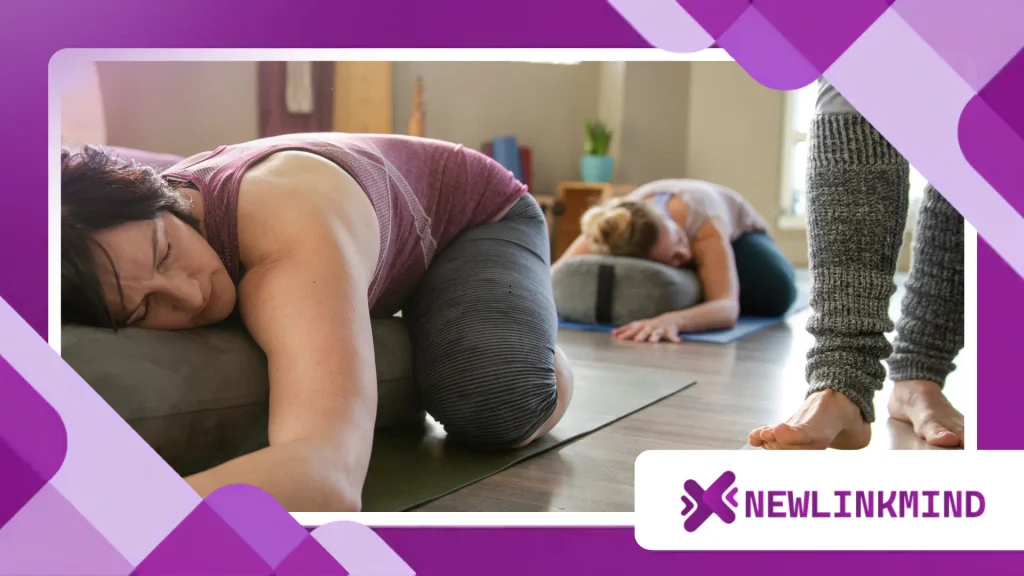
| Refroidir | Nervous System Downregulation | Supported Bridge Pose, Seated Forward Bend, Savasana | 5 à 8 minutes |
Which Specific Poses Work Best for Senior Yoga Intervals?
Selecting the right postures ensures maximum energy output with minimal joint irritation.
++ Essayez la méditation matinale de scan corporel avant de vous lever.
Dynamic sequences work best when they engage large muscle groups like the glutes, quadriceps, and core.
Active Movement Options
Dynamic Warrior I to High Lunge: Flowing between Warrior I and an upright reach warms the lower body while opening the chest.
Chair Pose Sweeps (Utkatasana): Inhaling arms upward while bending knees gently, then exhaling to sweep arms back and stand tall.
Seated or Standing Marching Mountain: Raising opposite arms and knees rhythmically engages the core and challenges balance dynamically.
Recovery Posture Options
Supported Mountain Pose (Tadasana): Standing tall against a wall with hands at heart center, focusing on slow, full exhalations.
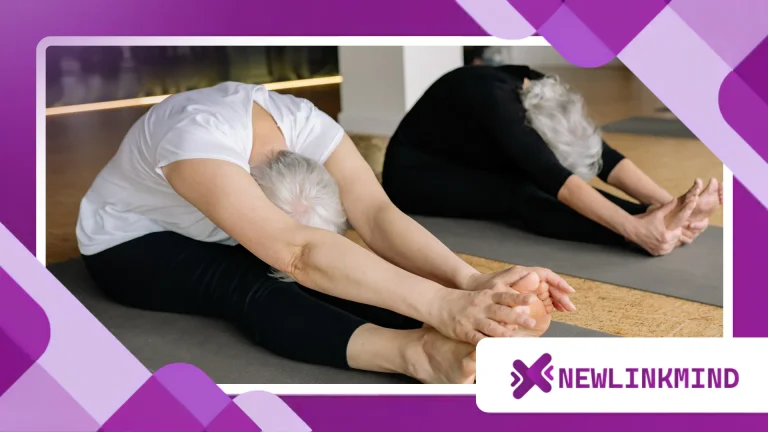
Seated Forward Fold (Paschimottanasana): Sitting on a sturdy chair, folding softly over the thighs to calm the nervous system.
Palms-to-Heart Standing Breath: Placing hands over the sternum while taking deep three-part abdominal breaths to lower the heart rate.
How Can Seniors Safely Modulate Effort and Avoid Overexertion?
Pushing past your physical limit defeats the purpose of restorative conditioning.
Using subjective intensity markers allows you to stay in an effective training zone without straining the cardiovascular system.
The Rating of Perceived Exertion (RPE) scale, ranging from 1 to 10, serves as a practical self-monitoring tool.
During active intervals, aim for an effort level between 4 and 6—where breathing is deeper, but holding a conversation still feels effortless.
Stability needs attention too. Keeping a sturdy chair nearby or working near a wall removes the anxiety of losing balance, leaving you free to focus on movement.
For additional guidelines on safe movement parameters, consult the physical activity guidelines from the Département de la Santé et des Services sociaux des États-Unis, which outline modified mobility strategies for older adults.]

Foire aux questions
Can beginners try interval-style yoga flows?
Beginners can adapt this style by using a chair for support and shortening the active phases.
Starting with 20 seconds of movement paired with a full minute of rest keeps the transition manageable.
How many times a week should seniors practice interval yoga?
Practicing two to three times per week gives the body enough recovery time while offering the consistent stimulus needed to build stamina.
Is interval yoga suitable for seniors with arthritis?
It often works surprisingly well. Because the movements stay within a comfortable range of motion, the continuous rhythm helps circulate synovial fluid, easing stiffness better than holding poses statically.
What equipment is needed for senior interval yoga?
Very little. A non-slip mat, a stable chair without armrests, two yoga blocks, and comfortable clothing are all you need to set up a safe space at home.
Building endurance in your later years doesn’t require exhausting workouts or rigid athletic training.
Introducing controlled, interval-style flows to the mat offers a direct, sustainable path to stronger heart health and steady daily energy.
Start with basic modifications, pay attention to how your body responds each day, and let your stamina rebuild itself naturally.
++ Reset Your Energy With Yoga Flows for Each Time of Day
++ A Chair-Supported Vinyasa to Build Your Strength and Stamina