anuncios
Aprendiendo a build a mindful recovery day gives your body and mind an intentional reset—combining gentle movement, targeted breathing, and deliberate pacing without leaving your living room.
When physical soreness, mental fatigue, or chronic stress sets in, the standard default for a day off is often collapsing on the couch and scrolling on a phone.
While passive rest has its place, it rarely resolves nervous system overload or muscle stiffness.
A structured recovery day bridges the gap between intense effort and full readiness.
By pairing low-impact yoga at home with evidence-based breathwork, you can lower baseline tension, improve mobility, and restore mental clarity in less than an hour of active practice.
Conclusiones clave
- Active recovery outperforms passive collapse: Gentle mobility and controlled breathing encourage blood flow and nervous system downregulation more effectively than prolonged sedentary screen time.
- Nervous system regulation starts with the breath: Slow, extended exhales stimulate the vagus nerve and help shift the body out of a sympathetic “fight-or-flight” state.
- Consistency matters more than duration: Two or three short, focused sessions spaced throughout the day are easier to sustain and often more restorative than a single marathon practice.
- Environment shapes recovery quality: Minimizing digital notifications, dimming harsh lighting, and using basic household props make home practice far more effective.
Why Does a Mindful Recovery Day Matter for Your Body and Nervous System?
Most people treat rest as the complete absence of activity, yet physical and cognitive fatigue often stem from an overstimulated autonomic nervous system.
High-intensity workouts, long hours at a desk, and constant digital alerts keep your sympathetic nervous system engaged, elevating cortisol and muscle tension even when you are sitting still.
Mindful recovery shifts your physiology toward the parasympathetic nervous system—often called the “rest-and-digest” response.
Rather than pushing for flexibility or strength, recovery-focused yoga emphasizes supported holds and slow transitions that signal safety to your brain.
Breathwork amplifies this effect by directly influencing heart rate variability and respiratory efficiency.
Together, gentle yoga and deliberate breathing clear metabolic stagnation in tight muscles while giving a racing mind a single, steady anchor.
Según el Centro Nacional de Salud Complementaria e Integral (NCCIH), yoga practices that combine physical postures, breathing techniques, and meditation can help reduce stress, support mental well-being, and improve sleep quality.
As noted by the Cleveland Clinic, diaphragmatic breathing helps slow the heartbeat, stabilize blood pressure, and reduce oxygen demand.
How Should You Prepare Your Home Space for Recovery?
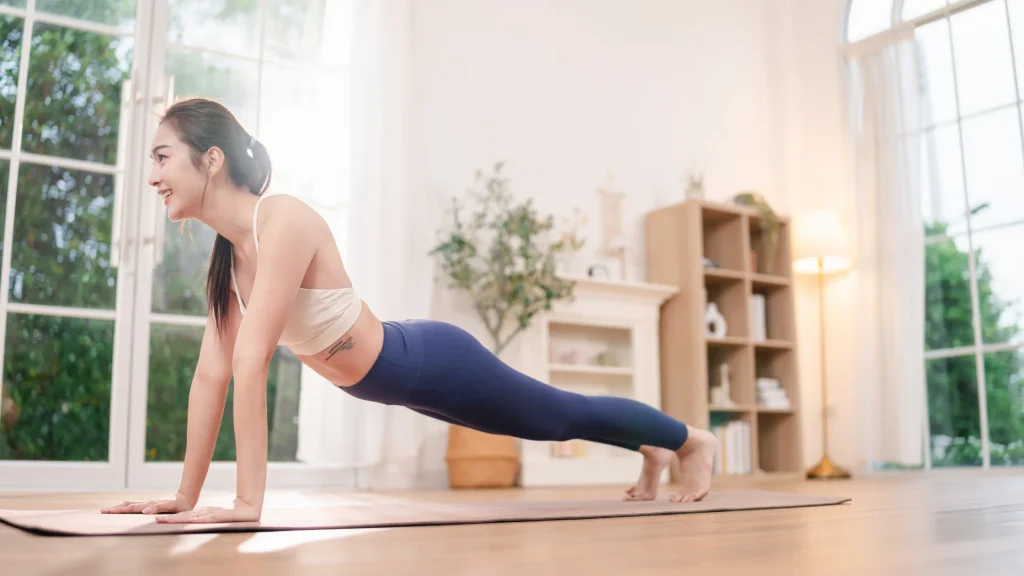
You do not need a dedicated studio or expensive gear to practice yoga at home effectively.
Setting up a calm, distraction-free zone removes friction so you can drop into a restorative state faster.
Clear a small floor area: Make sure you have enough room to stretch your arms out to the sides and lie flat on your back without bumping into furniture.
Gather household props: Grab two firm bed pillows, a folded bath towel or thick blanket, and a sturdy strap, bathrobe belt, or long hand towel.
Props bring the floor closer to you so your muscles can fully release instead of bracing against gravity.
Adjust lighting and temperature: Dim overhead lights or rely on natural daylight. Keep the room slightly warmer than usual, as your body temperature naturally drops during slow, restful floor work.
++ Incorpora progresiones al estilo de estudio a tu rutina de yoga en casa.
Silence non-essential alerts: Put your phone on Do Not Disturb mode or leave it in another room during your practice windows.
What Is the Best Sample Schedule to Build a Mindful Recovery Day?
A mindful recovery day works best when it follows your natural energy rhythm rather than a rigid checklist.
Lea aquí: Explora las tendencias de yoga caminando con Yoga en casa para días tranquilos.
Instead of cramming everything into one block, space short practices across morning, afternoon, and evening.
| Hora del día | Enfoque principal | Recommended Practice | Duración sugerida |
| Mañana | Gentle awakening and spinal mobility | Diaphragmatic breathing, Cat-Cow, and Thread the Needle | 15 to 20 minutes |
| Mediodía | Mid-afternoon nervous system reset | Physiological sighing and Legs-Up-the-Wall pose | De 10 a 15 minutos |
| Noche | Deep muscular release and sleep prep | Supported Child’s Pose, Supine Twist, and Box Breathing | 20 to 25 minutes |
| Todo el día | Hydration and low-stimulation pacing | Water intake, light walking, and reduced screen exposure | Ongoing |
This modular rhythm prevents stiffness from building up over long periods of sitting while keeping the physical demand low enough that you finish the day feeling energized rather than depleted.
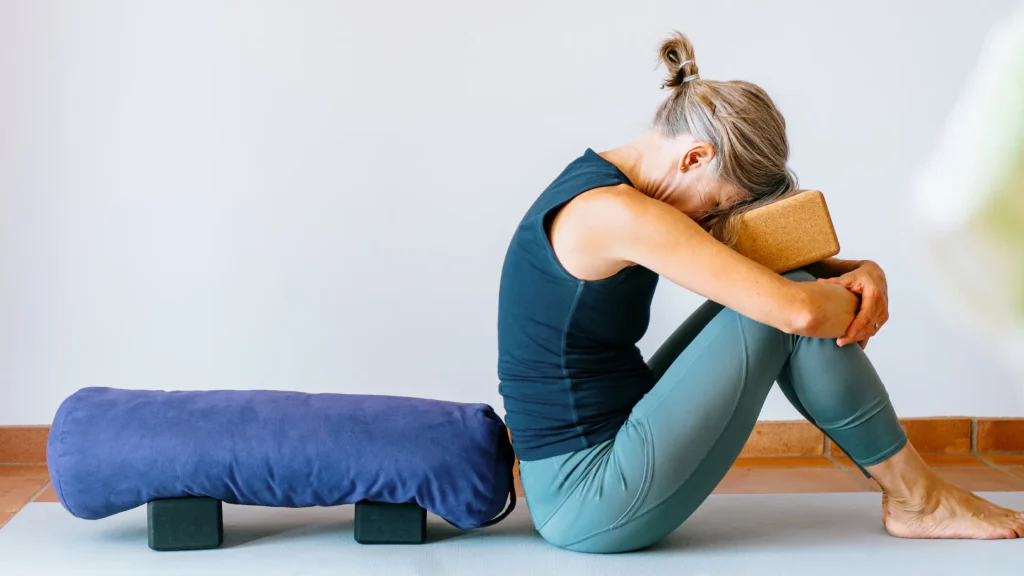
Which At-Home Yoga Poses Work Best for Active Recovery?
Recovery yoga focuses on decompression, mild traction, and supported stillness. Move slowly into each shape, stopping well before you feel sharp pinching or intense stretch sensations.
1. Cat-Cow (Marjaryasana-Bitilasana)
Start on your hands and knees with wrists under shoulders and knees under hips. Inhale as you drop your belly, lift your chest, and gently look forward.
Exhale as you press into your palms, round your upper back, and tuck your chin toward your chest.
++ Prueba una sesión sin instrucciones con meditación matutina al amanecer.
Repeat for eight to ten slow breaths to lubricate the spine and synchronize movement with your inhale and exhale.
2. Supported Child’s Pose (Balasana)
Kneel on your mat or a folded blanket, bring your big toes together, and widen your knees toward the edges of your mat.
Place a lengthwise stack of pillows between your thighs and drape your torso forward onto the support, turning your head to one side.
Rest here for two to three minutes, switching the direction your head faces halfway through to balance neck rotation.
3. Thread the Needle
From hands and knees, slide your right arm underneath your left arm with your palm facing up, lowering your right shoulder and temple to the floor or a folded towel.
Keep your hips stacked over your knees and breathe steadily into the space between your shoulder blades for five to eight breaths before switching sides.
This pose relieves upper-back and shoulder tension caused by computer work or upper-body training.
4. Reclined Hand-to-Big-Toe Pose (Supta Padangusthasana)
Lie flat on your back with both knees bent. Loop a strap, belt, or towel around the arch of your right foot and extend your right leg toward the ceiling, keeping a soft bend in the knee so the hamstring never strains.
Hold the ends of the strap with relaxed shoulders for eight to ten breaths, then switch legs.
5. Legs-Up-the-Wall Pose (Viparita Karani)
Sit sideways next to an empty wall, swing your legs up the wall as you lie back onto your mat, and rest your arms out to the sides with palms facing up.
Place a folded blanket under your lower back if your hamstrings feel tight. Stay for five to ten minutes to encourage venous return from the lower extremities and quiet mental chatter.
What Breathwork Techniques Calm the Nervous System Quickly?
Breathwork serves as the bridge between physical posture and mental stillness. Practicing these techniques seated in a chair or lying flat on your mat allows your ribcage to expand freely in all directions.
Diaphragmatic (Belly) Breathing
Place one hand on your upper chest and the other just below your ribcage. Inhale slowly through your nose for a count of four, allowing your belly and lower ribs to expand outward while your chest stays relatively still.
Exhale gently through your nose or pursed lips for a count of six. Continue for three to five minutes to establish an unhurried respiratory baseline.
Extended-Exhale Breathing (4-7-8 or 4-6 Pattern)
Lengthening your exhalation relative to your inhalation stimulates the parasympathetic response.
Inhale quietly through your nose for four seconds, pause gently without locking your throat for two to four seconds, and exhale smoothly for six to eight seconds.
If holding your breath creates anxiety or air hunger, skip the pause and simply practice a four-second inhale followed by a six-second exhale.
Suspiro fisiológico
When mental tension spikes mid-afternoon, use two quick inhales through the nose followed by one long, unhurried exhale through the mouth.
The second inhale helps re-inflate tiny air sacs in the lungs, maximizing carbon dioxide offloading on the exhale. Repeat this cycle three to five times to rapidly release acute chest tightness.
How Can You Personalize Your Recovery Day Around Daily Life?
A recovery routine only works if it fits the realities of your schedule, physical condition, and energy levels. Keep these practical adjustments in mind as you build your routine:
Listen to physical feedback: Mild muscular warmth or gentle opening is productive; numbness, tingling, or joint pain is a signal to back out of a pose immediately or add more pillow support.
Pair movement with light nourishment: Support tissue repair and hydration by drinking water consistently and eating balanced meals containing lean protein, complex carbohydrates, and healthy fats.
Consult a professional when needed: If you are managing an acute injury, chronic pain condition, pregnancy, or cardiovascular or respiratory concerns, check with a licensed healthcare provider or physical therapist before starting a new movement or breathwork routine.
Keep expectations realistic: Your mind will wander during longer holds. Noticing distraction and returning your attention to the physical sensation of breathing is the actual practice—not achieving blank-minded perfection.
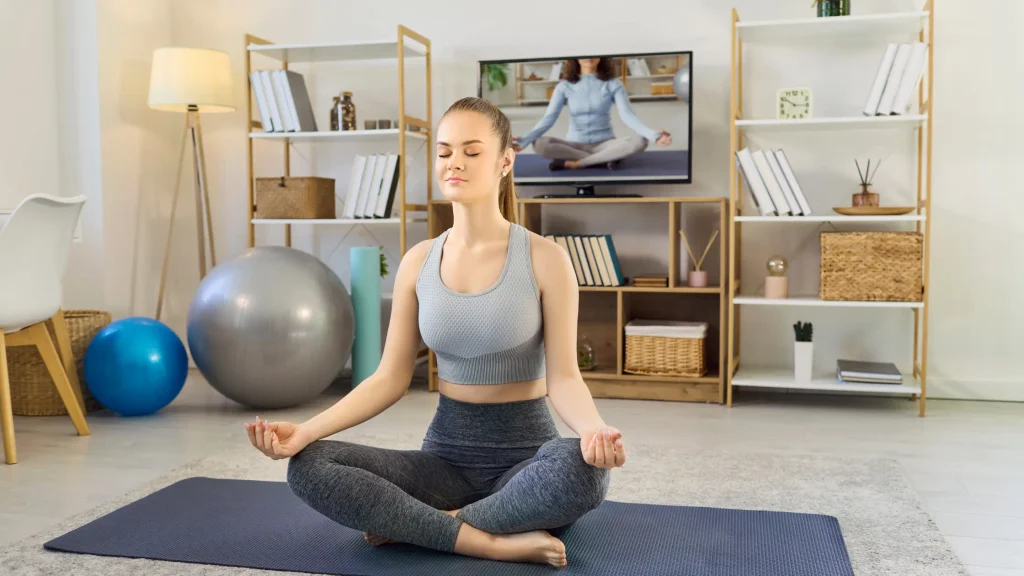
Conclusión
Eligiendo a build a mindful recovery day transforms rest from a passive afterthought into an active pillar of long-term health and performance.
By combining supported at-home yoga poses with slow, intentional breathwork, you give your muscles space to lengthen and your nervous system permission to downshift.
Start small this weekend: clear a quiet corner of your floor, set a timer for fifteen minutes, and pair three gentle floor poses with five minutes of extended-exhale breathing.
Preguntas frecuentes
How long should a mindful recovery yoga session last?
A single session does not need to last an hour to be effective.
Even 10 to 20 minutes of gentle floor poses paired with slow breathing can noticeably reduce muscle stiffness and mental tension, especially if you repeat a short session later in the day.
Can beginners do recovery yoga and breathwork at home?
Yes. Recovery-focused yoga relies on supported, low-to-the-ground postures rather than complex balances or intense flexibility.
Using household items like pillows, folded blankets, and towels makes the poses accessible regardless of your prior experience.
Is breathwork safe to practice every day?
Gentle techniques like diaphragmatic breathing and extended-exhale breathing are safe for most healthy adults to practice daily.
However, if you feel dizzy, lightheaded, or anxious during any breathing exercise, return to your normal breathing rhythm immediately, and consult a doctor beforehand if you have respiratory or cardiovascular conditions.
What is the difference between restorative yoga and a standard yoga workout?
Standard Vinyasa or power yoga classes build muscular endurance, cardiovascular heat, and balance through continuous movement.
Restorative and recovery yoga use props to fully support the body in passive or low-effort shapes held for longer periods, prioritizing nervous system relaxation and gentle joint decompression over physical exertion.