advertisements
When you build meaningful rituals through meditation for seniors, you turn quiet, ordinary moments into steady anchors for emotional balance, mental clarity, and physical comfort.
Retirement and later life bring welcome freedom, yet losing the built-in structure of a career or busy household can leave days feeling unanchored.
Rather than treating mindfulness as another chore on a to-do list, a daily ritual connects intention with habit, making consistency feel natural and rewarding.
Key Takeaways
- Consistency beats duration: Five to ten minutes of daily practice builds stronger neural habits and emotional resilience than an occasional 45-minute session.
- Habit stacking removes friction: Pairing meditation with an existing routine—such as morning coffee or bedtime tea—helps the practice stick automatically.
- Physical comfort comes first: You never need to sit cross-legged on the floor; a supportive armchair, bed, or gentle walking path works just as well.
- Evidence supports mind-body relief: Research compiled by federal health agencies shows meditation can help ease stress, anxiety, sleep disruptions, and chronic pain symptoms.
- Adaptability keeps rituals meaningful: Rotating simple techniques like breath awareness, body scans, and loving-kindness keeps your practice fresh as your needs change.
Why Daily Rituals Matter More Than Occasional Meditation
Many older adults try meditation once or twice, feel frustrated by a wandering mind, and give up. The missing ingredient is rarely willpower—it is ritual.
A routine is simply an action you repeat, while a ritual infuses that action with personal meaning, sensory cues, and deliberate presence.
In later adulthood, life transitions such as health changes, grief, or shifting family roles can elevate baseline stress.
According to the National Center for Complementary and Integrative Health (NCCIH), research indicates that mindfulness and meditation practices can help reduce symptoms of anxiety, depression, and stress, while also supporting better sleep quality.
When meditation becomes a daily ritual, your nervous system begins to recognize the cues—the chair, the time of day, the first deep exhale—and shifts into a calmer state faster.

How to Build Meaningful Rituals Through Meditation for Seniors
Creating a sustainable daily practice does not require special equipment, spiritual background, or complete silence.
++ Try a No-Instruction Session With Morning Meditation at Dawn
Focus on designing a repeatable sequence that respects your physical comfort and natural energy levels.
1. Anchor Your Practice to an Existing Habit
Behavioral psychologists often recommend “habit stacking”—attaching a new behavior to something you already do without thinking.
Read here: Pair Meditation and Sleep Hygiene With Meditation for Seniors Daily
Instead of trying to find spare time during the day, link your meditation to an established milestone:
After pouring your morning coffee or tea: Sit quietly for five minutes before turning on the television or checking the news.
Before lunch: Take ten slow, counted breaths at the kitchen table to reset your energy mid-day.
Before turning out the bedroom light: Practice a five-minute body scan while lying flat on your mattress.
2. Designate a Comfortable, Accessible Space
Physical discomfort is the fastest way to derail a new meditation habit. Forget images of sitting cross-legged on a thin floor cushion. Choose a spot that supports your posture and feels inviting:
- Use a sturdy armchair with lumbar support where your feet rest flat on the floor.
- Keep a light shawl or blanket nearby, since body temperature often drops slightly during deep relaxation.
- Add one subtle sensory cue, such as opening the curtains for morning light or holding a warm mug, to signal to your brain that your ritual has begun.

3. Choose a Technique That Matches Your Daily Needs
Different days call for different types of mental support.
++ Use Short Movement Blocks in Yoga for Seniors to Build Strength
Having two or three core techniques prevents boredom and allows you to tailor your ritual to how your body and mind feel that morning.
| Meditation Style | Best Time of Day | Primary Focus | Key Benefit for Older Adults |
| Breath Awareness | Morning or midday | Counting or feeling natural inhales and exhales | Calms racing thoughts and steadies focus quickly |
| Body Scan | Evening or before sleep | Noticing and releasing tension from head to toe | Eases physical tightness and prepares the body for rest |
| Loving-Kindness (Metta) | Morning or afternoon | Silently repeating phrases of goodwill for yourself and others | Reduces feelings of isolation and nurtures emotional warmth |
| Mindful Walking | Morning or late afternoon | Feeling each step, balance shift, and surrounding sounds | Combines gentle mobility with present-moment awareness |
A Sample 10-Minute Morning Ritual for Beginners
If you are unsure how to structure your first week, follow this straightforward four-step sequence every morning:
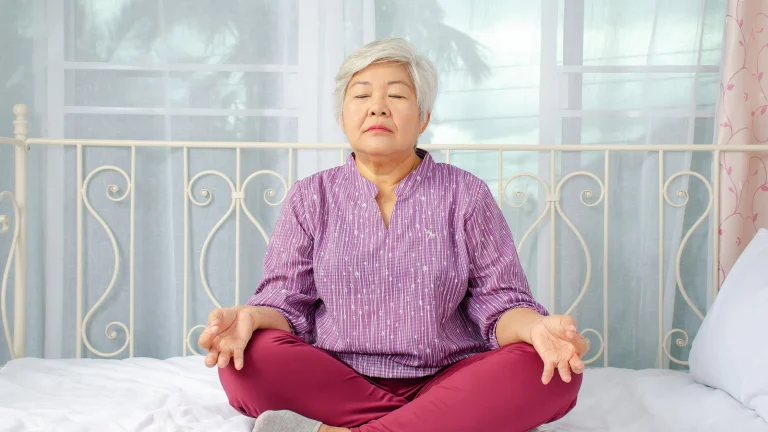
Settle and align (1 minute): Sit comfortably with your back supported and hands resting loosely on your thighs. Soften your gaze toward the floor or gently close your eyes.
Establish a breath anchor (4 minutes): Breathe naturally through your nose. Silently count “one” on the inhale and “two” on the exhale, continuing up to ten before starting over at one.
Check in with the body (3 minutes): Bring attention to your jaw, shoulders, and hands. On each exhale, allow tight muscles to soften without forcing them.
Close with gratitude (2 minutes): Before standing up, name one simple thing you appreciate today—a restful night, a sunny window, or an upcoming phone call with a friend.
Overcoming Common Obstacles in Later Life
Even well-designed rituals hit bumps. Knowing how to adjust keeps a minor interruption from turning into a stopped habit.
Managing Restlessness and a Wandering Mind
A busy mind does not mean you are meditating poorly.
Noticing that your thoughts have drifted to errands or memories—and gently returning attention to your breath—is the actual mental exercise. Treat each distraction like a passing cloud rather than a mistake.
Adapting for Arthritis, Back Pain, or Hearing Changes
Chronic stiffness or sensory changes should never exclude you from mindfulness. If sitting upright hurts your lower back or hips, practice lying down on a bed or reclining sofa.
If hearing loss makes audio apps frustrating, rely on tactile anchors—such as the warmth of your hands resting together or the rise and fall of your chest—instead of guided voice recordings.
Knowing When to Consult a Healthcare Professional
Meditation is a safe, low-cost complement to healthy aging, but it is not a replacement for medical care.
As noted by the National Council on Aging (NCOA), regular practice supports emotional and physical wellness alongside standard preventive habits.
If you experience persistent insomnia, severe anxiety, depression, or new physical pain, talk with your primary care doctor before relying on relaxation techniques alone.

Conclusion
When you build meaningful rituals through meditation for seniors, you give yourself a reliable sanctuary of calm regardless of what the day brings.
Start small tomorrow morning: pick one comfortable chair, set a timer for five minutes after your first sip of water or coffee, and focus on ten slow breaths.
Once that brief pause feels as natural as brushing your teeth, you can gradually expand your ritual in whatever direction serves you best.
Frequently Asked Questions
How long should seniors meditate each day to see benefits?
Five to ten minutes a day is plenty to establish a meaningful habit and lower daily stress.
Research programs often use 20- to 30-minute sessions, yet consistent brief practice is far more effective for beginners than sporadic long sessions.
What if I fall asleep during my meditation ritual?
Falling asleep usually means your body genuinely needed rest, especially during evening body scans.
If you want to stay awake for daytime clarity, try meditating earlier in the morning, sitting upright in a supportive chair, or keeping your eyes slightly open.
Can I practice meditation if I have trouble sitting still?
Yes. Mindful walking, gentle chair stretches, or seated tai chi movements allow you to anchor your attention in physical motion rather than stillness.
Is meditation connected to any specific religion?
While meditation has roots in ancient contemplative traditions, modern mindfulness and breath-focused rituals are completely secular.
You can practice them alongside any personal faith or purely as a practical tool for mental and physical wellness.