廣告
Yoga and journaling. Movement clears room for thought. If you’ve ever sat down with a blank journal only to stare at the page in total frustration, the problem usually isn’t a lack of ideas—it’s that your nervous system is still running on high gear.
Pairing physical yoga with post-practice writing bypasses that mental blockade, anchoring fleeting emotional states into concrete language.
This isn’t about running through a rigid morning routine. It is a practical, at-home synergy designed to cut through mental noise, lower physical stress, and help you actually process what you’re carrying.
重點總結
- 軀體釋放: Physical postures unlock bodily tension, making deep emotional reflections far more accessible once you pick up a pen.
- Low-Friction Routine: Merging movement and reflective writing into a single 20-minute block eliminates the paralysis of starting two separate habits.
- Nervous System Reset: Flowing through movement before writing lowers physiological stress markers, helping quiet the brain’s internal critic.
- Intentional Prompts: Targeted, specific prompts convert vague anxiety into clear, manageable self-insight.
Why Does Physical Movement Change How We Write?
There is something slightly counterintuitive about using movement to write better, yet the mechanics make absolute sense.
Most people approach journaling as a purely intellectual task, trying to think their way into clarity while trapped in a tense body.
Research highlighted by the 國家補充與綜合健康中心, shows that mind-body practices modulate stress pathways, shifting us out of a reactive state and into reflection.
When you move through a posture, physical tightness dissolves. Thoughts trapped beneath daily noise start to filter up.
By the time you sit down on the mat with a journal, you aren’t manufacturing reflection—you’re capturing insights that were already waiting to surface.
| Approach | 主要機制 | 精神狀態 | 長期影響 |
| Yoga Alone | Physical tension release & breath control | Shift toward Alpha wave relaxation | Short-term physical & nervous system calm |
| Journaling Alone | Cognitive reflection & verbalization | Analytical processing, prone to overthinking | High potential for mental friction or writer’s block |
| The Yoga + Journaling Combo | Somatic release followed by immediate reflection | Receptive, low-defense Alpha state | Deeper self-awareness and integrated emotional processing |

How to Build a Frictionless At-Home Practice
You don’t need a pristine studio or an hour of silence to make this work. A corner of your bedroom and twenty minutes are more than enough.
1. Grounding Movement (10 to 15 Minutes)
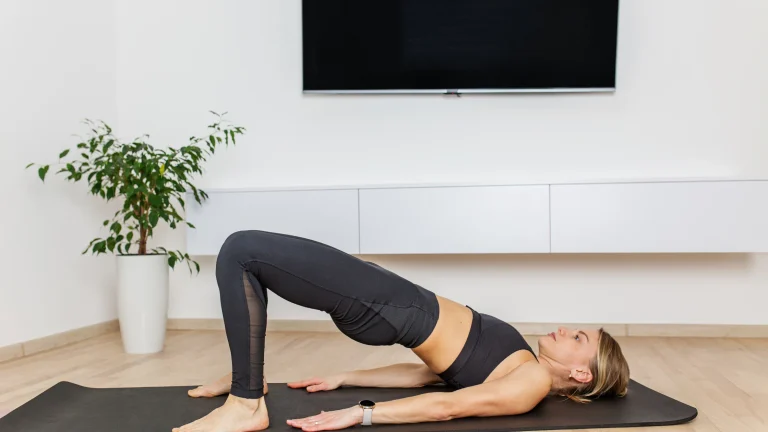
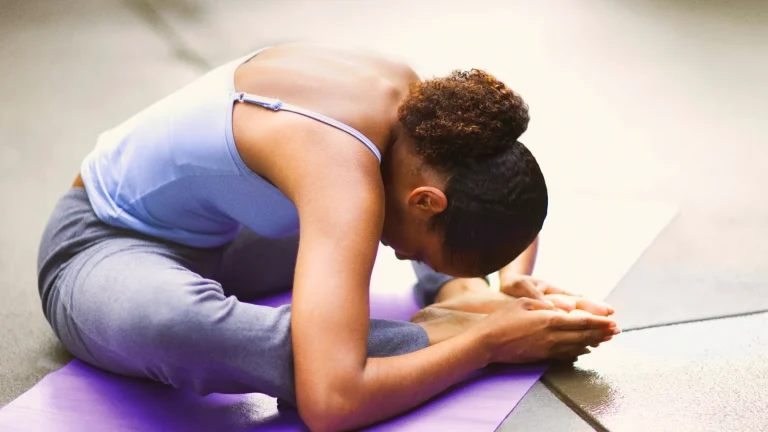
Skip the complex poses and focus on tension-heavy zones like the hips, shoulders, and spine. A brief sequence of Cat-Cow, low lunges, and Child’s Pose acts as a reset button, drawing awareness away from screens and back to physical sensation.
2. Immediate Reflection (5 to 10 Minutes)
Keep your notebook within arm’s reach of your mat. The moment you step out of Savasana, open the journal.
閱讀更多: 透過居家瑜珈練習增強旋轉控制能力
Skip the polished intros and grammar checks—just write raw, unedited observations while your mind remains calm and unshielded.
Which Prompts Cut Through the Noise?
Vague prompts lead to vague answers. To get real value out of your post-yoga entries, try questions that bridge physical feeling with mental state:
- Somatic Check-In: What specific area of my body felt tightest today, and what story might that tension be telling?
- Resistance Mapping: Which posture triggered impatience or frustration, and where else does that feeling show up in my week?
- Gratitude Unfiltered: What is one simple physical capability my body demonstrated today that I usually take for granted?
- Immediate Intent: What specific energy do I want to carry forward today, and what can I comfortably leave on the mat?
What Happens When Somatic Work Meets Cognitive Processing?
We often treat the mind and body as separate entities, but modern physiology tells us otherwise.
Expressive writing serves as a powerful release valve for mental stress, effectively freeing up cognitive bandwidth.In studies archived by the 美國心理學會
, expressive writing consistently reduced intrusive thoughts while enhancing emotional regulation.
When anchored by a preceding yoga practice, writing loses its stiffness. You stop overanalyzing how you should feel and start recording how you actually feel.
How Does Mindful Breathing Enhance Journaling Clarity?
整合 調息法 (breathwork) between your yoga sequence and journaling acts as a direct bridge for focus.
Deep, conscious breathing activates the parasympathetic nervous system, slowing down racing thoughts before your pen even touches paper.
Instead of staring blankly at a page, focused breathwork quiets cognitive static and opens up honest self-reflection.
This quick transition allows your post-yoga journal entries to flow with surprising ease, turning chaotic mental chatter into calm, articulate self-expression without force.
Why Consistency Outweighs Duration in Daily Practice
Spending just ten minutes combining movement and reflection daily creates far greater psychological benefits than an hour-long session once a week.
Short, consistent rituals build neural pathways that associate your yoga mat with immediate mental decompression.
When you eliminate the pressure of long routines, your brain views the practice as an approachable daily refuge rather than another stressful chore.
Over time, these small daily moments of movement and writing stack up into profound emotional resilience and sustained clarity.
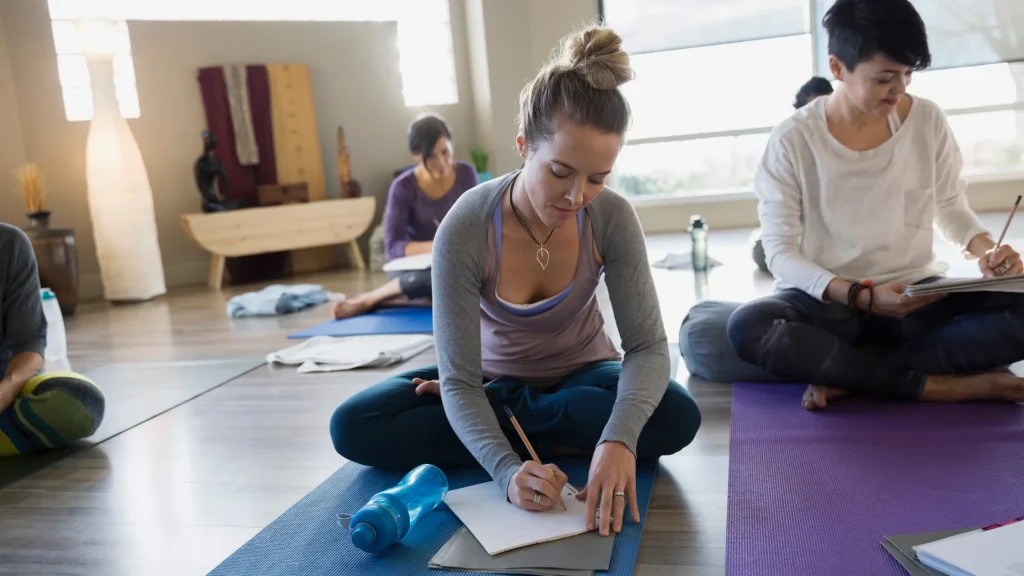
Building the Habit
Start small. Set up your mat in a visible spot tonight and place a pen directly on top of your journal.
Try a simple 15-minute combination for five consecutive days—ten minutes on the mat, five minutes on the page.
The goal isn’t literary perfection or complex yoga poses; it’s creating space to listen to what your body and mind are saying.
常見問題解答
Should I write before or after yoga?
Writing after yoga is usually far more effective. Movement relaxes the analytical filter, allowing honest thoughts to surface without friction.
That said, writing down frantic thoughts before a session can help clear the mind if you feel too restless to move.
What if I only have 10 minutes?
Ten minutes is plenty. Seven minutes of gentle stretching followed by three minutes of bullet-point writing creates a meaningful shift in perspective without derailing a busy schedule.
我需要特殊的設備才能開始嗎?
No. A simple non-slip mat, any standard notebook, and a reliable pen are all you need. The strength of the practice lies in consistency, not expensive gear.
++ Yoga and Journaling: A Powerful Combo for Self-Reflection
++ Enhancing Your Yoga Journey: The Role of Journaling in Your Yoga Practice