advertisements
However, you can try nano-mindfulness moments through workplace meditation daily to transform how you experience work without disrupting your schedule.
Workplace stress is at an all-time high, driven by tight deadlines, constant digital notifications, and back-to-back virtual meetings.
Many professionals feel they do not have thirty minutes to sit on a cushion and meditate during a busy workday.
These micro-interventions take less than sixty seconds, allowing you to reset your nervous system, sharpen focus, and restore clarity right at your desk.
Key Takeaways
- Micro-duration, maximum effect: Nano-mindfulness moments take 10 to 60 seconds and require no extra time blocked off in your calendar.
- Somatic resetting: Quick physical and mental check-ins pull your nervous system out of “fight-or-flight” mode during high-stress tasks.
- Seamless integration: You can practice while opening a new tab, waiting for a meeting to start, or sipping your morning coffee.
- Enhanced cognitive control: Regular micro-resets reduce cognitive fatigue, improve decision-making, and prevent afternoon energy slumps.
What Are Nano-Mindfulness Moments?
Nano-mindfulness moments are ultra-brief micro-meditations designed to anchor your attention in the present moment.
Unlike traditional meditation sessions that require extended quiet time, a nano-moment lasts anywhere from a single breath cycle to one minute.
The goal is not to clear your mind completely or enter a state of deep relaxation. Instead, nano-mindfulness acts as a gentle reset button for your focus.
By taking a few seconds to notice your physical sensations, track your breathing, or ground your feet on the floor, you break the cycle of automatic stress responses that build up throughout the workday.
The Science Behind Micro-Resets at Work
When you jump from task to task, your brain experiences what cognitive psychologists call continuous partial attention.
Over hours of unmanaged focus, your sympathetic nervous system stays mildly activated, triggering stress hormones like cortisol.
Research from institutions such as Harvard Medical School demonstrates that deliberate mindfulness practices engage the parasympathetic nervous system, slowing heart rate and encouraging the relaxation response.
Short, frequent pauses help maintain executive functioning, allowing your prefrontal cortex to stay in control of attention and emotional regulation.
Why Traditional Meditation Fails in Fast-Paced Workplaces
Many well-intentioned employees give up on workplace wellness routines because standard mindfulness models do not fit corporate reality.
Understanding why long sessions fall short highlights the advantage of micro-practices.
Time Scarcity: Packed calendars leave little room for 20-minute guided audio sessions.
Context Switching: Moving from a deep meditation state straight into an intense meeting can feel jarring.
Performance Pressure: Trying to force calmness during an urgent crisis often generates extra frustration.
Environmental Distractions: Open office layouts and home workspaces present frequent audio and visual interruptions.
++ Reduce Emotional Strain in Service Roles With Workplace Meditation
Nano-mindfulness bypasses these obstacles by blending directly into your current context. You do not need a quiet room, specialized apps, or a change of clothes.
5 Practical Nano-Mindfulness Exercises for Your Workday
You can introduce micro-meditation into your workday using simple techniques anchored to existing habits. Here are five actionable micro-practices to try:

1. The Single-Breath Reset
Before sending an important email or launching a presentation, take one deliberate breath.
Read more: Reduce Workplace Hyperarousal With Workplace Meditation
Inhale through your nose for four counts, hold briefly, and exhale slowly through your mouth for six counts. Pay full attention to the feeling of air moving in and out of your lungs.
2. Desk Grounding (5-4-3-2-1 Micro)
When anxiety spikes, use a compressed version of the 5-4-3-2-1 grounding technique. Take ten seconds to identify:
3 things you can see on your monitor or desk
2 physical sensations (e.g., your back against the chair, feet on the floor)
1 sound in your environment
3. The Doorframe Anchor
Use physical transitions as mindfulness cues. Every time you walk through a doorway, step into a conference room, or enter a new virtual meeting room, pause for two seconds to notice your posture and unclench your jaw.
4. Micro-Body Scan
Scan your physical body from head to toe in thirty seconds. Look for hidden tension in three major stress zones: your forehead, your shoulders, and your stomach.
++ Bring Studio-Style Progressions Into Your Yoga at Home Routine
Release that tension consciously on your next exhale.
5. Mindful Sip Practice
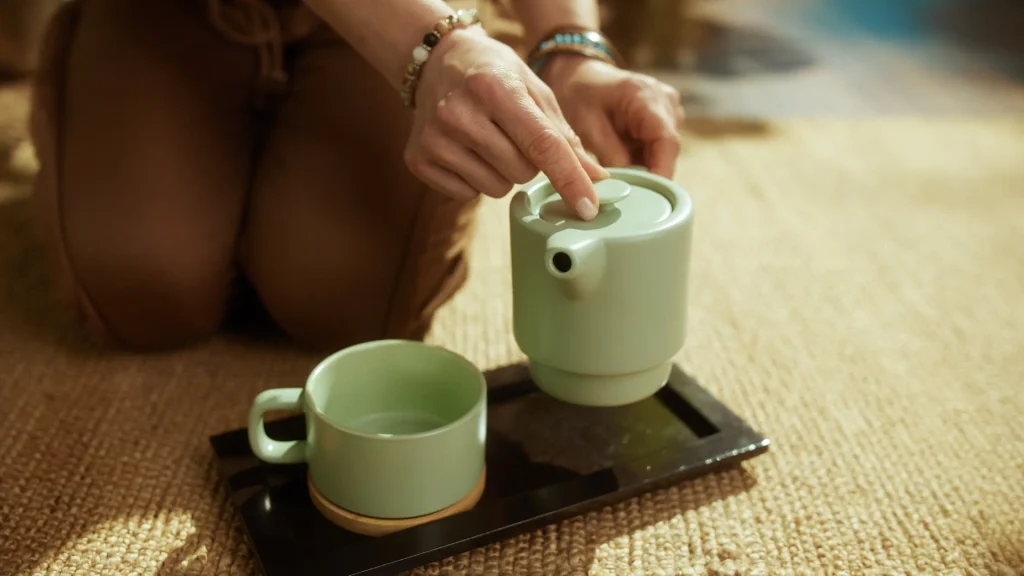
Instead of drinking coffee or water while typing, take three seconds to focus entirely on one sip.
Notice the temperature, taste, and sensation as you swallow before returning to your work.
Comparison of Workplace Mindfulness Approaches
| Feature | Traditional Workplace Meditation | Nano-Mindfulness Moments |
| Duration | 15–30 minutes | 10–60 seconds |
| Frequency | 1 time per day | 5–10 times per day |
| Location Required | Quiet room or designated space | Anywhere (desk, commute, Zoom call) |
| Schedule Impact | Requires calendar blockout | Zero calendar impact |
| Primary Benefit | Deep relaxation & stress relief | Stress prevention & focus preservation |
| Barrier to Entry | Moderate to High | Extremely Low |
How to Build a Daily Nano-Mindfulness Habit
Creating a sustainable practice requires hooking micro-moments onto existing triggers throughout your shift.
Behavior design principles show that tiny habits stick best when paired with routine actions.
Step 1: Identify Your Habit Anchors
Select three routine events that happen every day at work. Common anchors include:
Turning on your computer monitor in the morning
Waiting for a video call host to admit you
Pouring a glass of water or cup of coffee
Closing a completed task in your project manager
Saving a file before logging off

Step 2: Keep Expectations Microscopic
Commit to just five seconds per pause initially. The goal is to establish the habit of stopping, not to achieve a specific emotional state.
Step 3: Track Consistency Over Duration
Focus on how many micro-moments you complete rather than how long they last.
Tallying five 10-second pauses across an eight-hour day is far more effective for stress regulation than trying to complete one longer session that gets canceled when urgent work arises.
Overcoming Common Workplace Mindfulness Challenges
Even tiny practices encounter resistance. Here is how to navigate typical hurdles:
“I forget to pause during busy moments”: Place a small visual cue near your screen, such as a colorful sticky note or a desktop wallpaper with a quiet icon, to remind you to take a breath.
“I feel self-conscious around coworkers”: Nano-mindfulness practices are completely internal. Nobody notices if you take a deliberate breath or adjust your posture while looking at your screen.
“My mind is racing too fast”: Do not try to stop your thoughts. Simply observe how fast your mind is running, acknowledge it without judgment, and return to your physical breath for five seconds.
For broader strategies on managing workplace stress and occupational health standards, resources from the National Institute for Occupational Safety and Health (NIOSH) offer evidence-based guidelines on workplace stress intervention.
Conclusion
Workplace wellness does not require radical calendar overhauls or long meditation breaks.
By choosing to try nano-mindfulness moments through workplace meditation daily, you create small pockets of stillness that protect your focus, energy, and mental health.
Start today by choosing a single anchor—like your next video meeting waiting room—and taking one conscious breath before you begin.
Frequently Asked Questions
Can ten seconds of mindfulness really make a difference?
Yes. Short, frequent mindfulness pauses help regulate your autonomic nervous system throughout the day.
Rather than letting stress compound over eight hours, micro-resets clear accumulated tension in real time.
How often should I practice nano-mindfulness during the workday?
Aim for 5 to 10 micro-moments per day. Anchoring them to existing routines—such as starting your computer, taking a drink of water, or transitioning between meetings—makes consistency easy.
Is nano-mindfulness effective for high-stress jobs?
Nano-mindfulness is particularly effective in high-stress roles because it does not require taking time away from pressing tasks.
You can perform micro-grounding exercises during active work without losing momentum.
++ Micro Meditations You Can Do at Your Desk: 10 Simple Practices
++ Six micro mindful moments you can implement today for big change over time