anúncios
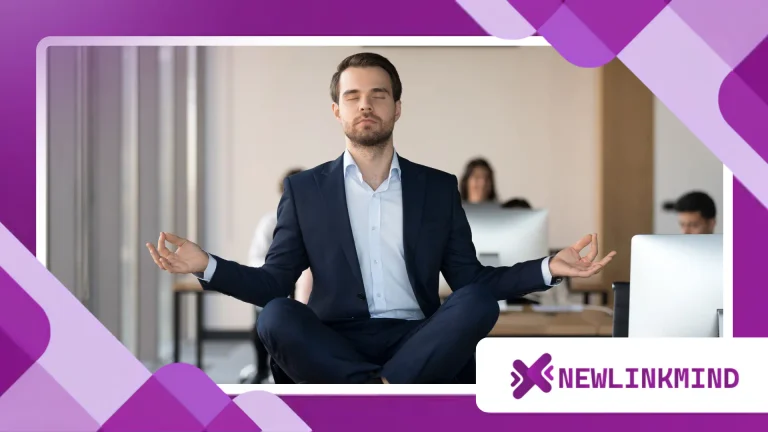
Para reduce emotional strain in service roles, frontline professionals are increasingly turning to evidence-based workplace meditation to manage emotional labor, maintain composure, and protect against long-term occupational burnout.
Customer-facing positions—ranging from retail associates and contact center agents to hospitality staff and healthcare workers—require constant emotional regulation.
Smiling through difficult interactions, de-escalating conflicts, and suppressing personal feelings to meet organizational expectations creates significant psychological fatigue.
Simple, targeted mindfulness practices integrated directly into the workday can mitigate these pressures, building resilience and enhancing emotional wellbeing without sacrificing productivity.
Principais conclusões
- Service roles carry a heavy burden of “emotional labor,” which accelerates psychological exhaustion when unaddressed.
- Short, functional meditation practices—such as micro-mindfulness and targeted breathwork—help workers reset their nervous system between challenging customer interactions.
- Integrating brief mindfulness pauses into existing workflows helps decrease physical stress responses like elevated cortisol and blood pressure.
- Leadership support, non-punitive break policies, and dedicated quiet spaces are necessary to make workplace meditation practical and sustainable.
Understanding Emotional Strain and Emotional Labor in Service Roles
Service roles demand a high degree of emotional regulation, a concept sociological research defines as “emotional labor.”
First identified by sociologist Arlie Hochschild, emotional labor refers to the process of managing feelings and expressions to fulfill the emotional requirements of a job.
In customer service, sales, healthcare, and hospitality, employees must consistently project empathy, warmth, and patience, regardless of their actual internal state or how a customer treats them.
This creates a psychological gap known as emotional dissonance—the disconnect between genuinely felt emotions and required professional displays.
Over time, chronic emotional dissonance drains mental energy, leads to depersonalization, and significantly increases the risk of career burnout.
When service workers are forced to suppress frustration or anxiety repeatedly without a recovery mechanism, the sympathetic nervous system stays perpetually activated.
This “fight-or-flight” state manifests physically as muscle tension, elevated heart rate, and chronic fatigue, which directly undermines both job performance and personal health.

How Workplace Meditation Counters Psychological Fatigue
Workplace meditation acts as a direct countermeasure to the physiological and psychological impact of emotional labor.
Rather than requiring long, isolated meditation retreats, workplace mindfulness focuses on practical, task-oriented techniques designed to recalibrate the nervous system during the workday.
When a customer interaction turns aggressive or stressful, the human brain perceives a threat, triggering the amygdala and flooding the body with stress hormones like cortisol and adrenaline.
Mindful awareness disrupts this automatic reaction. By shifting focus back to physical sensations or breathing patterns, workers engage the parasympathetic nervous system—the body’s natural “rest and digest” mechanism.
Regular meditation practice alters brain structure over time, strengthening the prefrontal cortex—the area responsible for executive functioning, impulse control, and emotional regulation.
For service personnel, this neuroplastic adaptation translates into an expanded “gap” between a stressful trigger (such as an irate customer) and their emotional reaction.
++ Melhore a transição entre vida profissional e pessoal com meditação no local de trabalho.
Instead of reacting instinctively out of frustration, workers gain the cognitive space needed to choose a calm, professional response.
Practical Meditation Techniques for High-Stress Customer Environments
Service environments rarely afford employees forty-five minutes of quiet solitude.
Leia mais: Evite a queda de energia da tarde com meditação no local de trabalho.
Consequently, workplace meditation strategies for customer-facing teams must be modular, fast, and adaptable to busy schedules.
Micro-Mindfulness and Desk-Based Resets
Micro-mindfulness involves brief, 30-to-60-second exercises performed immediately after a challenging interaction.
Before picking up the next call or greeting the next customer, the worker pauses to anchor their attention on three physical sensations: the feel of their feet firmly planted on the floor, the pressure of sitting in their chair, and the temperature of the air entering their nostrils.
This grounds the mind in the present moment and prevents emotional residue from leaking into subsequent interactions.
De acordo com uma pesquisa publicada pela Centro Nacional de Saúde Complementar e Integrativa, mindfulness meditation practices have been shown to help manage stress, reduce anxiety, and improve overall psychological health across diverse adult populations.
Box Breathing for Immediate De-escalation
Controlled breathing directly regulates the heart rate and blood pressure.
The “box breathing” method (also known as four-square breathing) is an effective, quiet tool that service workers can use discreetly:
- Inhale slowly through the nose for a count of four.
- Hold the breath gently for a count of four.
- Exhale smoothly through the mouth for a count of four.
- Pause with lungs empty for a count of four.
Repeating this cycle three or four times signals to the autonomic nervous system that the immediate threat has passed, allowing the worker to regain composure quickly.

Body Scan Meditation During Break Periods
During scheduled rest breaks, a five-minute body scan allows workers to identify and release accumulated physical tension.
++ Explore o bem-estar neurológico através da ioga em casa e da respiração lenta.
Starting from the toes and moving up to the crown of the head, the individual mentally scans each body part, intentionally relaxing tightly held muscles in the jaw, shoulders, and lower back where emotional stress naturally concentrates.
Comparing Stress Management Interventions for Service Teams
Organizations often evaluate multiple wellness interventions to mitigate employee turnover and strain.
The table below compares common workplace wellness strategies on key operational parameters.
| Estratégia | Mecanismo Primário | Implementation Effort | Operational Impact | Time Required per Session |
| Meditação no local de trabalho | Regulates autonomic nervous system and builds long-term emotional resilience | Baixo a moderado | Immediately reduces acute stress; fits into micro-breaks | 1 to 10 minutes |
| Traditional EAP Counseling | Provides professional therapeutic support for severe distress | Low (Outsourced) | Excellent for long-term health; requires external scheduling | 45 to 60 minutes |
| Ergonomic Adjustments | Reduces physical strain and body fatigue from repetitive movement | Moderado a Alto | Prevents physical injury; indirectly supports mood | N/A (Continuous) |
| Mandatory Extended Breaks | Restores physical energy through total disconnect from duties | High (Scheduling) | Helps overall fatigue; can disrupt shift coverage if unmanaged | 15 to 30 minutes |
While Employee Assistance Programs (EAPs) and physical break schedules remain essential pillars of corporate wellness, workplace meditation offers a unique advantage: it serves as an immediate, self-administered toolkit that workers can access on-demand during active shifts.
Implementing a Workplace Meditation Strategy: Step-by-Step
Introducing mindfulness into a fast-paced service environment requires a thoughtful operational approach.
Without structural support, employees may feel that meditation is just another task added to an already overwhelming workload.
Step 1: Secure Leadership Buy-In and Model Behavior
Mindfulness programs fail when management views them as a gimmick or a substitute for fair labor practices.
Leadership must communicate that mental rest is a legitimate business priority.
Supervisors and shift managers should participate in training and actively normalize taking micro-mindfulness breaks.
Step 2: Establish Physical and Digital Safe Spaces
Providing a dedicated environment for mental resets significantly boosts program participation.
In physical locations, such as retail stores or call centers, designate a quiet, clean room free from work paraphernalia or breakroom distractions.
For remote or hybrid teams, establish digital boundaries—such as mute periods or protected transition minutes between back-to-back phone queues.
Step 3: Offer Flexible, Self-Paced Training Options
Avoid mandatory, long-form seminars that disrupt operations and induce scheduling stress.
Instead, provide access to guided audio meditations, brief digital learning modules, or live 10-minute drop-in sessions hosted by certified facilitators.
Step 4: Measure Impact Through Anonymous Feedback
Track program effectiveness using anonymized metrics such as internal satisfaction surveys, absentee rates, staff turnover, and reported burnout levels.
Adjust program offerings based on direct feedback from frontline workers.
For comprehensive guidelines on workplace health and psychological safety standards, organizations can review workplace guidance published by the Administração de Segurança e Saúde Ocupacional, which highlights systemic strategies to prevent occupational burnout.

Conclusão
Reducing emotional strain in service roles is essential for maintaining workforce wellbeing and operational consistency.
While customer interactions will always present unpredictable challenges, workplace meditation provides employees with immediate, practical tools to reset their physiological stress response.
By integrating micro-mindfulness, box breathing, and brief body scans into daily routines—supported by clear leadership backing—organizations can build a resilient, emotionally balanced team capable of delivering high-quality service without sacrificing mental health.
Perguntas frequentes
What is the most effective way for service workers to practice meditation during a busy shift?
The most effective approach is micro-mindfulness, which involves short 30-to-60-second reset exercises.
Workers can practice controlled box breathing or anchor their attention on physical sensations right at their desk or workstation immediately after a challenging customer interaction.
Can workplace meditation replace traditional mental health benefits or counseling?
No, workplace meditation is a complementary tool designed for real-time stress regulation and resilience building.
It should work alongside comprehensive mental health resources, such as Employee Assistance Programs (EAPs) and professional counseling, rather than serve as a replacement for clinical support.
How can managers encourage service staff to use meditation techniques without adding pressure?
Managers can foster participation by modeling the behavior themselves, ensuring break times are strictly protected, and providing quiet, dedicated spaces for mental resets.
Offering flexible, optional resources rather than making mindfulness sessions mandatory helps employees adopt these habits naturally.
++ Mindfulness at Work: Evidence-Based Practices for a Stressful Workplace (2026)
++ How to Reduce Stress at Work Using Mindfulness-Based Strengths Practice