anúncios
Seu celular vibra com um e-mail de alta prioridade, seu calendário dispara um alerta de reunião de 5 minutos e uma notificação do Slack pisca em vermelho — tudo isso antes mesmo de você terminar o primeiro gole do seu café da manhã.
Seu ritmo cardíaco acelera, seus ombros ficam tensos e seu foco profissional se estilhaça instantaneamente.
Quando você passa de oito a dez horas por dia preso nesse estado de alerta químico contínuo, você está sofrendo de hiperativação crônica no ambiente de trabalho.
Aprender como reduzir a hiperestimulação no local de trabalho Não é mais um luxo ou uma regalia corporativa; é uma habilidade fundamental de sobrevivência para os profissionais modernos.
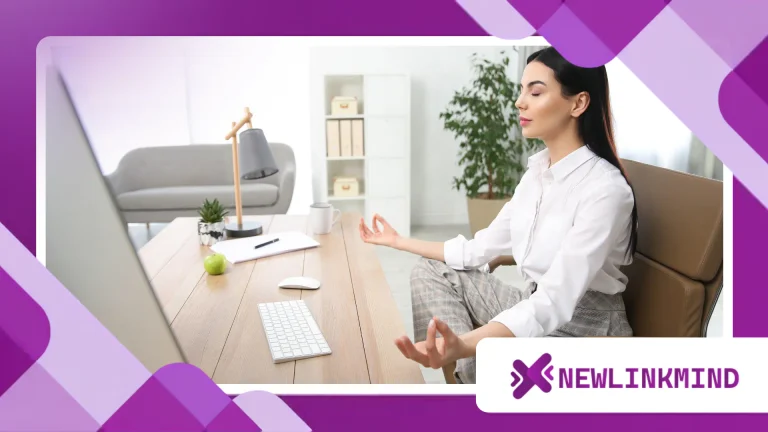
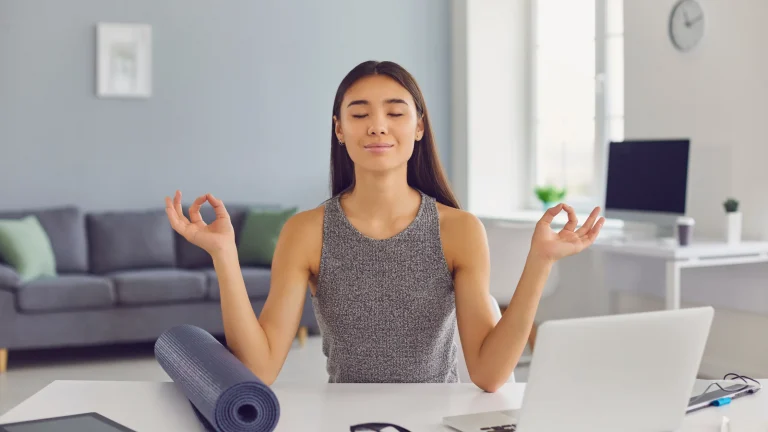
Integrar a meditação direcionada ao ambiente de trabalho em sua rotina diária oferece um método direto e cientificamente comprovado para acalmar o sistema nervoso sem sacrificar sua produtividade ou ritmo profissional.
Principais conclusões
- Hiperativação no local de trabalho Desencadeia uma resposta contínua de "luta ou fuga" que prejudica a concentração, a regulação emocional e a saúde física a longo prazo.
- Micromeditações e exercícios respiratórios estruturados ativam diretamente o sistema nervoso parassimpático durante momentos de alto estresse no dia de trabalho.
- Sessões curtas e direcionadas de mindfulness proporcionam uma recuperação cognitiva superior em comparação com retiros de meditação longos e pouco frequentes.
- Protocolos simples, realizados em escritórios, podem interromper instantaneamente ciclos de estresse agudo sem prejudicar o fluxo de trabalho da equipe ou as responsabilidades profissionais.

O que é hiperativação no ambiente de trabalho e por que ela está aumentando?
A hiperativação no local de trabalho ocorre quando o sistema nervoso autônomo permanece preso em um estado persistente de alerta sensorial.
Seu cérebro, subconscientemente, percebe prazos apertados de projetos, notificações digitais constantes e dinâmicas interpessoais difíceis como ameaças físicas imediatas à sua sobrevivência.
Como consequência direta, seu corpo libera cortisol e adrenalina continuamente, mantendo suas defesas fisiológicas em estado de alerta máximo.
Com o tempo, esse banho químico contínuo leva a uma fadiga severa das funções executivas.
Você poderá notar lapsos repentinos de memória, irritabilidade aumentada com colegas ou incapacidade de tomar decisões claras sob pressão profissional moderada.
O principal fator que impulsiona esse crescimento moderno não é simplesmente o volume de trabalho, mas a fragmentação digital — a constante troca de contextos exigida por espaços de escritório abertos, mensagens instantâneas e ferramentas de comunicação ininterrupta.
Seu cérebro nunca recebe um sinal claro de que o perigo do dia de trabalho passou.
Como a meditação no local de trabalho ajuda a redefinir o sistema nervoso?
A meditação no local de trabalho funciona como um disjuntor intencional para o seu sistema nervoso simpático hiperativo.
Quando o estresse profissional agudo surge, sua amígdala efetivamente sequestra seu processamento cognitivo de ordem superior.
A prática focada da atenção plena transfere o controle do centro emocional do medo de volta para o córtex pré-frontal, a região responsável pela lógica estratégica, planejamento e regulação emocional.
Ao diminuir intencionalmente o ritmo da respiração e concentrar a atenção dispersa, você estimula o nervo vago.
A estimulação do nervo vago libera acetilcolina, um neurotransmissor crucial que diminui a frequência cardíaca e sinaliza ao cérebro que você está seguro.
++ Recupere-se mais rapidamente de interrupções no trabalho com meditação no ambiente de trabalho.
Essa mudança fisiológica te tira do estresse reativo e te leva de volta a um estado ideal para um trabalho profundo e criativo.

Para entender como a hiperativação aguda difere do engajamento saudável, revise os marcadores fisiológicos abaixo:
| Marcador | Hiperativação no local de trabalho | Foco em um Trabalho Saudável |
| Região Cerebral Primária | Amígdala (Resposta Emocional à Ameaça) | Córtex pré-frontal (função executiva) |
| Padrão respiratório | Respiração torácica superficial e rápida | Respiração diafragmática profunda e rítmica |
| Estado cognitivo | Reativo, disperso, hipervigilante | Proativo, constante, criativo |
| Variabilidade da Frequência Cardíaca (VFC) | Baixo (Indica nível de estresse crônico) | Alto (Indica adaptabilidade e calma) |
| Sintomas físicos | Tensão muscular, desconforto gastrointestinal, ranger de dentes. | Postura relaxada, níveis de energia estáveis |
Quais práticas de meditação são mais eficazes para reduzir a hiperestimulação no ambiente de trabalho?
Nem todas as técnicas de mindfulness se encaixam na realidade caótica de um dia profissional agitado. Retiros silenciosos prolongados ou sessões guiadas de 45 minutos são totalmente impraticáveis entre videochamadas consecutivas.
Leia aqui: Prevenindo a fragmentação da atenção em ambientes de trabalho digitais
Em vez disso, as micropráticas táticas proporcionam alívio fisiológico rápido sem a necessidade de uma sala silenciosa ou equipamentos especializados.
1. O Protocolo de Respiração 4-7-8
Essa técnica de respiração estruturada funciona como um tranquilizante natural para um sistema nervoso sobrecarregado. Sente-se ereto na cadeira do escritório com os dois pés apoiados no chão para estabilizar a postura.
Inspire silenciosamente pelo nariz contando até 4, prenda a respiração contando até 7 e expire completamente pela boca com um suave som de "whoosh" contando até 8.
++ Meditação para profissionais que lutam contra o estresse
Repita exatamente este ciclo quatro vezes sempre que um e-mail alarmante ou uma crise interromper sua concentração.
2. Respiração quadrada (respiração tática)
Popularizada por profissionais sob alta pressão, socorristas e operadores de elite, a respiração quadrada restaura o controle cognitivo imediato.
Inspire pelo nariz durante 4 segundos, prenda a respiração por 4 segundos, expire de forma constante pela boca durante 4 segundos e mantenha os pulmões vazios por 4 segundos.
Realizar essa sequência simples por apenas dois minutos reduz a pressão arterial e diminui as reações imediatas de pânico.
3. Escaneamento Somático de Mesa
A hiperestimulação causa uma tensão física profunda que alimenta o pânico psicológico. Feche os olhos por 60 segundos e faça um escaneamento corporal sistemático, do queixo aos dedos dos pés.
Relaxe conscientemente os dentes, afaste os ombros das orelhas e solte os músculos do abdômen. Liberar essa tensão física envia um sinal vital ao cérebro de que a ameaça imediata passou.
Pesquisa detalhada por Centro Nacional de Saúde Complementar e Integrativa, demonstra como práticas que integram mente e corpo reduzem efetivamente a ativação do sistema nervoso simpático e aumentam a resiliência ao estresse a longo prazo.
Como as equipes podem construir uma rotina sustentável de meditação no ambiente de trabalho?
Os esforços individuais geram grandes benefícios pessoais, mas o apoio organizacional amplifica esses resultados em todos os departamentos.
Criar um ambiente que estimule a regulação do sistema nervoso reduz o esgotamento sistêmico e diminui a custosa rotatividade de funcionários.
Estabeleça tempos de margem de segurança não negociáveis: Evite convites consecutivos na agenda definindo a duração padrão das reuniões para 25 ou 50 minutos. Use os minutos restantes estritamente para respirar e relaxar mentalmente.
Normalizar a comunicação assíncrona: Reduza a hipervigilância constante definindo expectativas claras em relação aos tempos de resposta. Funcionários que não esperam uma resposta imediata evitam ciclos crônicos de hiperativação.
Designar zonas de silêncio: Transforme um escritório ou canto subutilizado em um santuário livre de tecnologia. Garanta que esse espaço permaneça completamente livre de laptops, telefonemas e discussões de trabalho.
Liderar pelo exemplo: Os líderes executivos devem praticar visivelmente o estabelecimento de limites e a atenção plena. Quando os gestores se afastam publicamente para se reequilibrar, os funcionários sentem-se seguros para fazer o mesmo.
Superando os obstáculos comuns à atenção plena no local de trabalho
Muitos profissionais têm dificuldade em manter hábitos de atenção plena porque abordam a meditação com expectativas rígidas e irrealistas.
Você não precisa ter a mente completamente vazia para se beneficiar da meditação; perceber que sua mente divagou e gentilmente trazê-la de volta é o verdadeiro exercício.
Outra barreira comum é o medo de parecer improdutivo. Reinterpretar essas micropausas como manutenção cognitiva, em vez de tempo ocioso, muda tudo.
Assim como um atleta profissional precisa de pausas para revisar a estratégia e descansar os músculos, os trabalhadores do conhecimento necessitam de intervalos mentais para manter o desempenho cognitivo máximo ao longo de uma exaustiva semana de trabalho de 40 horas.
Os benefícios clínicos dos programas de redução do estresse vão muito além do simples relaxamento.
De acordo com dados revisados por pares da Escola de Saúde Pública Harvard TH Chan, O estresse crônico no local de trabalho está diretamente relacionado a riscos elevados de problemas cardiovasculares, distúrbios metabólicos e fadiga mental grave.
A implementação de práticas estruturadas de mindfulness neutraliza diretamente esses riscos à saúde ocupacional a longo prazo.
Perguntas frequentes
Quanto tempo leva para reduzir a hiperestimulação no local de trabalho com a meditação?
As mudanças fisiológicas começam quase instantaneamente. Exercícios de respiração estruturados podem ativar o sistema nervoso parassimpático e diminuir a frequência cardíaca em dois a três minutos.
Mudanças duradouras na resiliência basal ao estresse geralmente surgem após 8 a 10 semanas de micropráticas diárias e consistentes.
Será que meditar no ambiente de trabalho pode me fazer perder minha competitividade ou motivação?
Não. A meditação reduz o pânico e a reatividade emocional, não a ambição ou a perspicácia.
A redução da hiperativação restaura a capacidade do seu córtex pré-frontal para o pensamento estratégico, a resolução criativa de problemas e a atenção sustentada, tornando você significativamente mais eficaz sob pressão.
E se o meu ambiente de trabalho for muito barulhento para a meditação tradicional?
A meditação no local de trabalho não exige silêncio absoluto. Você pode praticar a micro-respiração de olhos fechados ou a varredura somática da mesa enquanto usa fones de ouvido com cancelamento de ruído e ruído ambiente.
Alternativamente, concentre-se inteiramente na ancoragem sensorial com os olhos abertos, observando três texturas físicas ao redor do seu espaço de trabalho.
Recuperar o controle sobre o seu sistema nervoso não exige horas de contemplação silenciosa nem mudanças drásticas no estilo de vida.
Pequenas pausas intencionais distribuídas ao longo do seu dia de trabalho quebram eficazmente o ciclo de tensão crônica.
Ao integrar micromeditações simples à sua rotina, você pode reduzir a hiperestimulação no local de trabalho, Proteja sua saúde a longo prazo e traga de volta o foco tranquilo e sustentável para sua carreira.
++ O papel da meditação na redução do estresse no ambiente de trabalho
++ Técnicas de meditação para o gerenciamento do estresse no ambiente de trabalho