publicités
Explore neurowellness through structured home yoga and regulated slow breathing techniques designed to support brain health, enhance parasympathetic tone, and manage physiological stress response.
Modern neurobiology shows that deliberate physical movement combined with controlled respiration offers a direct pathway to influence autonomic balance and neural flexibility.
Rather than viewing yoga solely as physical exercise, integrating targeted postures with conscious respiration transforms a basic daily routine into an evidence-supported brain health practice.
This guide explores the physiological mechanics connecting body movement, respiration, and brain resilience.
You will learn how home-based practices activate vagal pathways, stabilize heart rate variability, and support long-term cognitive and emotional health.
Points clés à retenir
- Neurowellness links movement and slow breathing to stimulate the vagus nerve and promote autonomic recovery.
- Regulated slow breathing—specifically extending exhalations—signals safety to the central nervous system and lowers circulating cortisol levels.
- Practicing gentler yoga postures at home reduces physical tension while increasing neuroplasticity and executive function in the prefrontal cortex.
- Consistent 10-to-15-minute daily sessions yield more sustainable nervous system benefits than occasional high-intensity workouts.
- Combining postural alignment with paced respiration provides a accessible, low-cost method for building stress resilience.
Understanding Neurowellness and the Brain-Body Connection
Neurowellness describes a holistic framework prioritizing neural health through targeted lifestyle habits.
At its core is the autonomic nervous system, which manages involuntary bodily functions and divides into two main branches: the sympathetic system (“fight or flight”) and the parasympathetic system (“rest and digest”).
When stress becomes chronic, sympathetic dominance leads to elevated cortisol, shallow breathing, and persistent physical tension.
Regulated slow breathing and gentle yoga movement act as bottom-up interventions. Physical sensations and altered respiration send signals up through the brainstem to regulate emotional centers in the brain.
The main neural bridge in this process is the vagus nerve. As the primary cranial nerve of the parasympathetic system, the vagus nerve extends from the brainstem down through the heart, lungs, and digestive tract.
Engaging in slow, controlled exhalations stimulates vagal nerve fibers, lowering heart rate and signaling safety across the entire central nervous system.

The Science of Slow Breathing and Autonomic Regulation
Respiration serves as a unique bridge between voluntary control and involuntary physiology.
While heart rate and digestion function automatically, you can consciously adjust your breathing pace and depth to alter brain activity.
Research summarized by the Centre national pour la santé complémentaire et intégrative demonstrates that mind-body practices involving regulated breathing can effectively reduce physiological stress indicators and support general emotional wellness.
Slowing respiratory rates down to roughly 5 to 6 breaths per minute optimizes baroreflex sensitivity and enhances heart rate variability, a key marker of autonomic resilience.
Key Respiratory Mechanisms
- Extended Exhalations: Prolonging the exhale relative to the inhale increases parasympathetic tone through respiratory sinus arrhythmia.
- Diaphragmatic Engagement: Deep belly breathing expands the lower lobes of the lungs, stimulating dense vagal innervation located in the lower chest cavity.
- Gas Exchange Balance: Paced breathing maintains optimal arterial carbon dioxide levels, avoiding the cerebral vasoconstriction associated with hyperventilation.
Essential Home Yoga Postures for Nervous System Health
Practicing yoga at home eliminates external distractions, allowing you to focus on internal body sensations.
The goal in neurowellness-focused yoga is not flexibility or physical exertion, but interoceptive awareness and autonomic regulation.
1. Legs-Up-the-Wall (Viparita Karani)
This passive inversion uses gravity to facilitate venous return to the heart, signaling arterial baroreceptors to reduce heart rate and systemic blood pressure.
2. Supported Child’s Pose (Balasana)
Resting the forehead against a block or bolster stimulates facial nerve branches connected to the parasympathetic network while gently stretching the lower back.
3. Cat-Cow Stretch (Marjaryasana-Bitilasana)
Synchronizing spinal flexion and extension with breathing coordinates muscle movement with respiratory rhythm, strengthening motor-sensory neural pathways.
4. Reclined Bound Angle Pose (Supta Baddha Konasana)
Opening the chest and hips without muscle strain relaxes respiratory accessory muscles, allowing the diaphragm to move freely.
En savoir plus: Améliorez vos mouvements grâce au yoga à domicile
Core Breathwork Practices for Neurowellness
Integrating specific breathing practices into your daily home routine helps retrain dysfunctional breathing habits.
These three accessible practices support autonomic balance:
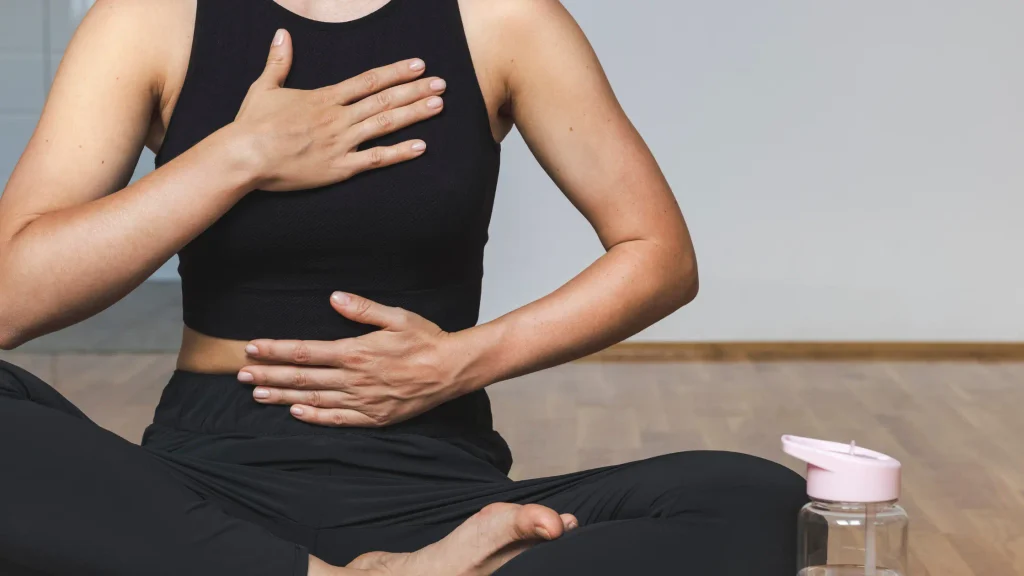
Diaphragmatic Belly Breathing
Sit or lie comfortably with one hand on your chest and the other on your abdomen. Inhale deeply through the nose, expanding the lower abdomen while keeping the chest relatively quiet.
++ Associez méditation et hygiène du sommeil à la méditation quotidienne pour les seniors
Exhale slowly through gently pursed lips. Practice for 5 to 10 minutes daily to lower baseline stress.
Resonant (Coherent) Breathing
Inhale smoothly for a count of 5 seconds, then exhale smoothly for a count of 5 seconds without holding your breath.
This 10-second breath cycle creates a heart rate rhythm that maximizes autonomic nervous system coordination.
Respiration alternée par les narines (Nadi Shodhana)
Using your right hand, alternate closing your right and left nostrils while breathing smoothly and slowly.
Studies published in peer-reviewed journals, such as the systematic review on breathwork interventions available via the National Institutes of Health PMC Library, show that voluntary breathing regulation yields measurable benefits for subjective stress reduction across diverse adult populations.
Neurowellness Practices Comparison
The following table summarizes common home practices, their underlying physiological mechanisms, primary nervous system impacts, and recommended daily durations.
| Practice Style | Key Mechanism | Nervous System Impact | Suggested Duration |
| Respiration diaphragmatique | Lower lung expansion & vagal stimulation | Reduces acute cortisol and heart rate | 5 à 10 minutes |
| Resonant Breathing (5s In / 5s Out) | Cardiorespiratory coupling & baroreflex tuning | Optimizes heart rate variability | 10 à 15 minutes |
| Gentle Asana Flow | Sensory-motor coordination with breath | Lowers motor unit tension & anxiety | 15–30 minutes |
| Passive Inversions | Gravity-assisted blood pressure regulation | Rapid parasympathetic activation | 10 à 20 minutes |
| Respiration alternée par les narines | Hemispheric balance & focal attention | Calms racing thoughts & improves focus | 5 à 10 minutes |
Designing a Daily Neurowellness Routine at Home
Consistency is more important than session length when retraining nervous system responses. A practical 15-minute home routine can be structured as follows:
Step 1: Environment Setup (1 Minute)
Select a quiet space with minimal distraction. Dim bright overhead lights or step away from digital screens to reduce visual processing load.
Step 2: Centering & Resonant Breathing (4 Minutes)
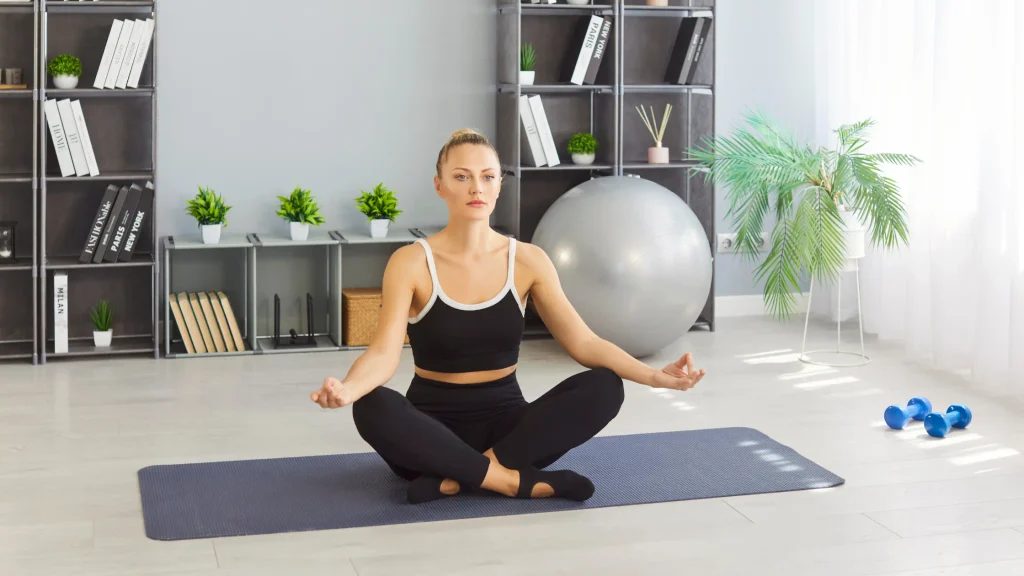
Sit comfortably with a tall spine. Begin 5-second inhales and 5-second exhales, establishing a steady respiratory rhythm before introducing movement.
Step 3: Gentle Breath-Movement Integration (6 Minutes)
Perform slow Cat-Cow transitions followed by a supported Child’s Pose. Match every movement to the natural cadence of your breath.
Step 4: Restorative Inversion & Relaxation (4 Minutes)
Transition to Legs-Up-the-Wall or a comfortable reclining position. Focus on prolonging your exhalations to complete the practice in a parasympathetic state.
Erreurs courantes à éviter
Forcing the Breath: Straining or holding your breath too long can trigger a sympathetic alarm response rather than relaxation.
Overexertion: Pushing into intense physical poses creates muscle strain, raising stress signaling in the brain.
Incohérence dans le timing : Practicing sporadically yields fewer neuroplastic benefits than brief, daily practice.
Conclusion
Combining gentle home yoga with slow, regulated breathing offers a reliable way to support long-term brain and nervous system health.
By regularly engaging vagal pathways and prioritizing parasympathetic recovery, you can build emotional resilience, lower stress, and enhance daily clarity.
Begin by incorporating just 10 minutes of diaphragmatic breathing and gentle movement into your daily schedule.
Foire aux questions
What is the difference between standard yoga and yoga for neurowellness?
Standard yoga often emphasizes physical strength, flexibility, or aerobic fitness.
Yoga for neurowellness focuses on nervous system regulation, using slow movements, interoceptive awareness, and targeted breathing to balance autonomic function and lower stress.
How quickly does slow breathing lower the body’s stress response?
Slowing your breath and extending your exhalations can trigger parasympathetic activation and lower your heart rate within 60 to 90 seconds.
Consistent daily practice helps establish long-term physiological resilience.
Can I practice neurowellness techniques if I have mobility limitations?
Yes. Neurowellness practices depend on breathing regulation and gentle movement rather than advanced postures.
Breathwork and gentle stretches can easily be modified for a chair or lying down in bed.
++ Daily Yoga and Breathwork for Mental Wellness: A Guide to Calm