publicités
Le vieillissement entraîne un changement de perspective discret, mais il introduit aussi de nouveaux obstacles psychologiques. Les pertes de mémoire, les limitations physiques et les transitions de vie suscitent souvent frustration, regret ou anxiété.
Lorsque nous évaluons ces expériences de manière négative, le stress quotidien se multiplie.
Développer une conscience non jugeante permet aux personnes âgées d'observer leurs pensées et leurs sensations corporelles sans les qualifier de “ bonnes ” ou de “ mauvaises ”.”
Ce changement de perspective transforme la façon dont les personnes âgées appréhendent le vieillissement, leur offrant un équilibre émotionnel et une clarté mentale.
Points clés à retenir
- Définition fondamentale : La conscience sans jugement consiste à observer les expériences du moment présent sans leur attribuer de jugement de valeur immédiat.
- Bienfaits pour la santé cérébrale : La pleine conscience réduit les hormones du stress et favorise la flexibilité cognitive chez les personnes âgées.
- Application pratique : De simples micro-méditations quotidiennes peuvent briser les cycles d'autocritique liés à la mobilité physique ou aux pertes de mémoire.
- Techniques accessibles : Les exercices sur chaise et le contrôle de la respiration s'adaptent parfaitement aux différents besoins physiques.
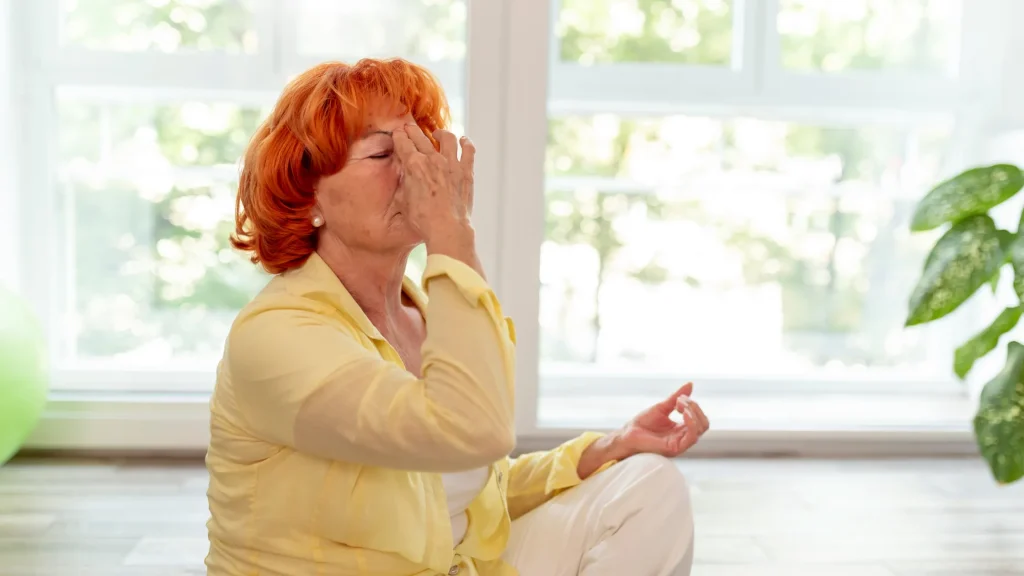
Qu’est-ce que la conscience sans jugement dans la pleine conscience chez les personnes âgées ?
La conscience sans jugement représente le pilier fondamental de la méditation de pleine conscience.
En substance, cela signifie prendre conscience de ses sensations physiques, de ses émotions et de ses pensées avec une curiosité neutre plutôt que de les évaluer immédiatement.
Lorsqu'une articulation vous fait mal ou qu'un nom vous échappe, la réaction par défaut est souvent la colère ou l'anxiété dirigées contre soi-même.
Vous pourriez penser, “ Mon corps me lâche ” ou “ Je perds de ma vivacité. ” Pratiquer une conscience non jugeante modifie ce dialogue intérieur.
L'idée devient : “ Je ressens un malaise en ce moment. ” ou “ Mon esprit prend un instant pour se souvenir de ce mot. ” En supprimant la réaction émotionnelle, vous préservez votre énergie mentale et réduisez les souffrances inutiles.
Selon une étude clinique publiée par Instituts nationaux de la santé, La pratique régulière de la pleine conscience permet de réduire les niveaux de cortisol systémique et les symptômes d'anxiété liés à l'âge.
Observer le stress sans l'adopter comme une identité modifie les circuits émotionnels du cerveau.
| Fonctionnalité | Réaction de jugement | Conscience sans jugement |
| Douleur physique | “ Cette douleur me gâche toute la journée. ” | “ Je ressens des tensions dans le bas du dos. ” |
| trous de mémoire | “ Mon cerveau ne fonctionne tout simplement pas. ” | “ Ma mémoire me fait défaut ce matin. ” |
| État émotionnel | “ Je ne devrais pas me sentir aussi seul. ” | “ Je ressens un sentiment de solitude. ” |
| Mobilité quotidienne | “ Je marche trop lentement. ” | “ Mon corps bouge à un rythme mesuré. ” |
Quels sont les bienfaits de la pleine conscience sans jugement sur le cerveau vieillissant ?
Le cerveau humain conserve sa neuroplasticité jusqu'à un âge avancé. La pratique de la pleine conscience soutient activement cette adaptabilité cellulaire, contribuant ainsi à préserver les réserves cognitives et la stabilité émotionnelle.
++ Développer de meilleures capacités d'observation grâce à la méditation pour les seniors
Réduire la rumination et la frustration liée à la mémoire
Les personnes âgées sont souvent sujettes à des ruminations sur leurs regrets passés ou leurs incertitudes quant à leur santé future. Une prise de conscience sans jugement permet de rompre ces schémas.
Au lieu de se laisser submerger par les inquiétudes liées à la perte de mobilité, les personnes âgées apprennent à reconnaître l'anxiété comme un état physiologique passager.
++ Comment utiliser les sons de la nature pour améliorer la méditation chez les personnes âgées
Reconnaître une pensée sans la combattre permet à l'émotion de passer naturellement, libérant ainsi de l'espace mental pour les activités quotidiennes.
Améliorer le confort physique et la tolérance à la douleur
La douleur chronique touche une part importante des personnes âgées. Si la méditation ne fait pas disparaître les maux physiques, modifier son rapport mental à la douleur influence le traitement sensoriel neuronal.
Résister à l'inconfort physique amplifie la tension musculaire et intensifie la douleur perçue. Adopter une attitude neutre permet de dissocier la sensation physique de la détresse émotionnelle qui y est généralement associée.
Quelles sont les techniques de méditation simples les plus efficaces pour les personnes âgées ?
La méditation ne nécessite pas de rester assis en tailleur par terre pendant des heures. Les personnes âgées obtiennent des résultats optimaux grâce à des techniques douces et très accessibles, adaptées à leur routine quotidienne.
En savoir plus: Améliorez vos mouvements de transition grâce à la pratique du yoga à domicile
L'ancre de respiration de 5 minutes
Asseyez-vous confortablement dans un fauteuil offrant un bon soutien, les pieds bien à plat sur le sol. Fermez les yeux ou baissez doucement le regard vers le sol.
Concentrez-vous entièrement sur le mouvement de votre abdomen qui se soulève et s'abaisse.
Observez chaque inspiration et expiration naturelle sans essayer de forcer un rythme précis.
Observez vos pensées lorsqu'elles surgissent — comme des nuages dérivant dans un ciel clair — et recentrez doucement votre attention sur votre respiration.
Évitez de vous critiquer lorsque votre esprit vagabonde ; remarquez la distraction. est la pratique.
Le doux scan corporel
Allongez-vous confortablement ou asseyez-vous dans une position détendue. Portez lentement votre attention sur différentes parties de votre corps, en commençant par vos orteils et en remontant vers votre tête.
Prenez conscience de toute zone de tension, de chaleur ou de douleur sans chercher à la corriger immédiatement.
Notez simplement, “ J’ai des tensions dans les épaules. ” et prenez une respiration profonde et régulière dans cette zone avant de déplacer votre attention vers l'avant.
Pourquoi la régularité quotidienne est-elle plus importante que la durée des séances ?
Les longues séances de méditation peuvent souvent paraître insurmontables, ce qui entraîne un manque de régularité.
Les recherches en psychologie gériatrique démontrent que des exercices courts et réguliers donnent de bien meilleurs résultats cognitifs que des séances sporadiques et prolongées.
Commencer par seulement trois à cinq minutes par jour permet de créer des habitudes durables.
Les personnes âgées qui s'engagent dans des pratiques quotidiennes brèves font état d'améliorations durables de leur humeur et de leurs habitudes de sommeil par rapport à celles qui tentent des séances intenses et irrégulières.
Intégrer une conscience non jugeante dans les tâches quotidiennes – comme plier le linge, boire du thé ou s'asseoir sur le porche – ancre la pleine conscience directement dans la vie de tous les jours.
Quels sont les défis courants rencontrés lorsqu'on commence la pleine conscience plus tard dans la vie ?
Des attentes irréalistes freinent souvent la progression des débutants. Comprendre les obstacles courants permet de maintenir le cap dans sa pratique.
- S'attendre à un esprit vide : La méditation ne consiste pas à arrêter complètement ses pensées ; elle consiste à modifier sa façon de réagir à elles.
- Agitation physique : Ajustez votre position assise chaque fois que nécessaire. Le confort prime sur les postures rigides.
- Doute quant à l'efficacité : L'entraînement cérébral prend du temps. Les ajustements neurologiques se produisent progressivement au fil des semaines de pratique.
Conseils fournis par École de santé publique T.H. Chan de Harvard Elle souligne que la pleine conscience apporte des améliorations notables en matière de santé lorsqu'elle est intégrée à une alimentation équilibrée et à une activité physique légère.
Foire aux questions
La méditation de pleine conscience peut-elle contribuer à améliorer la qualité du sommeil chez les personnes âgées ?
Oui. La pratique d'une conscience non jugeante apaise le système nerveux sympathique, réduisant ainsi les pensées qui s'emballent tard dans la nuit et aidant les personnes âgées à s'endormir plus rapidement tout en profitant de cycles de sommeil plus profonds et plus réparateurs.
Combien de temps faut-il pour ressentir les bienfaits mentaux d'une conscience non jugeante ?
La plupart des participants déclarent se sentir plus calmes et moins réactifs émotionnellement après deux à trois semaines de pratique quotidienne régulière, même avec des séances aussi brèves que cinq minutes.
La méditation sur chaise est-elle aussi efficace que la méditation assise traditionnelle ?
Absolument. Une bonne posture physique doit favoriser le confort et l'alignement de la colonne vertébrale ; s'asseoir sur une chaise élimine les tensions corporelles, vous permettant de vous concentrer pleinement sur votre conscience mentale sans distraction.
++ Une pratique de pleine conscience pour une conscience sans jugement
++ Les bienfaits de la méditation de pleine conscience pour les personnes âgées – et comment débuter