
publicités
La méditation soutient les transitions émotionnelles à la retraite en offrant un point d'ancrage psychologique lors d'une des transitions les plus importantes de la vie, aidant ainsi les retraités à s'orienter dans le parcours complexe vers une nouvelle identité.
Résumé du voyage
- Comprendre l'impact psychologique du départ du marché du travail.
- Comment la pleine conscience atténue le syndrome de “ perte de sens ”.
- La science derrière la méditation et la neuroplasticité tardive.
- Techniques pratiques pour gérer le temps libre non structuré qui se libère au quotidien.
- Développer sa résilience émotionnelle grâce à une pratique méditative régulière.
Pourquoi la retraite est-elle considérée comme une source majeure de stress dans la vie ?
Bien que souvent célébrée comme une récompense longtemps attendue, la retraite figure en bonne place sur l'échelle de stress de Holmes-Rahe car elle implique une perturbation fondamentale des routines quotidiennes.
Depuis des décennies, les rôles professionnels définissent notre statut social, fournissent des horaires structurés et offrent un sentiment constant d'accomplissement et de validation externe.
La suppression soudaine de ces piliers peut déclencher un “ vide de retraite ”, caractérisé par de l'anxiété, de l'agitation, voire une perte temporaire d'identité.
Les recherches indiquent que cette transition exige un travail émotionnel important pour réconcilier le soi passé avec un avenir dépourvu de feuille de route professionnelle ou d'entreprise claire.
Comment la méditation soutient-elle les transitions émotionnelles à la retraite ?
La pratique de la pleine conscience sert de pont entre le mode “ action ” intense de la vie professionnelle et le mode “ être ” réflexif du vieillissement réussi.
En favorisant une prise de conscience sans jugement, La méditation soutient les transitions émotionnelles à la retraite en permettant aux individus d'observer leurs craintes liées au vieillissement sans se laisser submerger par elles.
Cette régulation émotionnelle est cruciale face au calme soudain du télétravail ou au manque d'interactions quotidiennes avec les collègues.
Au lieu de combler le silence par des tâches futiles, la méditation apprend aux personnes âgées à s'asseoir avec leurs pensées, transformant une solitude potentielle en une solitude productive et paisible.
Quels sont les bienfaits cognitifs de la pleine conscience pour les personnes âgées ?
Avec l'âge, le cerveau subit naturellement des changements structurels, mais il a été démontré que la méditation préserve la matière grise et améliore les fonctions exécutives.
Une étude réalisée par Centre national pour la santé complémentaire et intégrative met en lumière comment la pleine conscience contribue à réduire le déclin cognitif lié à l'âge et à améliorer la mémoire.
Au-delà de la mémoire, la méditation améliore la flexibilité émotionnelle, c'est-à-dire la capacité à s'adapter à de nouvelles situations sans détresse importante.
Cette flexibilité est essentielle lorsque les retraités doivent redéfinir leurs objectifs quotidiens ou gérer les changements de leur santé physique et de leur mobilité.
Mesures de la résilience émotionnelle chez les praticiens retraités
| Métrique | Non-praticiens | Méditants réguliers (6 mois et plus) | Avantage pour les retraités |
| Niveaux de cortisol | Standard | 15-20% Inférieur | Réduction du stress lors des changements de vie |
| Qualité du sommeil | Problèmes de signalement 55% | 78% signale “ Bon ” | Meilleure récupération et stabilité de l'humeur |
| Score de solitude | moyenne plus élevée | Nettement inférieur | Sentiment accru de connexion interne |
| Concentration cognitive | Déclin rapide | Attention soutenue | Capacité à se lancer dans de nouveaux loisirs/acquérir de nouvelles compétences |
Quelles techniques de méditation sont les plus efficaces pour les jeunes retraités ?
Toutes les pratiques de pleine conscience ne se valent pas face aux défis spécifiques du vieillissement et de la retraite. Les débutants obtiennent souvent de bons résultats avec les méditations de “ scan corporel ”, qui aident à reconnecter l’esprit aux sensations physiques souvent négligées lors d’une carrière stressante.
En savoir plus: Méditation pour les seniors qui n'ont jamais ‘ aimé ’ la méditation auparavant
Une autre méthode efficace est la méditation de “ bienveillance ” (Metta), qui vise à développer la compassion envers soi-même et envers les autres.
Cela est particulièrement utile pour ceux qui ont du mal à gérer l'autocritique ou les regrets concernant leur héritage professionnel ou le temps “ perdu ” perçu après avoir quitté leur travail.
Quand devriez-vous commencer à méditer à la retraite ?
Le moment idéal pour commencer est pendant la phase de “ pré-retraite ”, environ six mois avant le dernier jour de travail.
Mettre en place une routine solide dès le début permet de s'assurer que l'habitude est déjà bien ancrée lorsque les turbulences émotionnelles de la transition atteignent leur paroxysme.
++ Comment les personnes âgées peuvent utiliser la méditation pour rester positives et reconnaissantes
Cependant, il n'est jamais trop tard pour commencer, car le cerveau reste plastique tout au long de la vie. Cinq minutes de pratique quotidienne suffisent pour réduire significativement le rythme cardiaque et améliorer le bien-être de la personne qui pratique ce nouveau mode de vie.
Comment la méditation améliore-t-elle les liens sociaux après le travail ?
Quitter son lieu de travail signifie souvent perdre un réseau social intégré, ce qui peut mener à l'isolement. La méditation soutient les transitions émotionnelles à la retraite en rendant les individus plus présents et empathiques, ce qui facilite la formation de nouvelles amitiés significatives dans les centres communautaires.
Les cours de méditation en groupe offrent un double avantage : les effets apaisants de la pratique et un sentiment d’appartenance à une nouvelle communauté.
Voyez comme c'est intéressant : Le rituel de méditation avant la réunion
Ces expériences partagées contribuent à combler le fossé entre une vie sociale axée sur la carrière et une expérience de retraite ancrée dans la communauté.
Quels sont les mythes concernant la méditation chez les personnes âgées ?
De nombreux retraités croient à tort qu'ils ne peuvent pas “ faire le vide dans leur esprit ” parce qu'ils ont passé quarante ans dans des environnements à forte pression.
En réalité, la méditation ne consiste pas à arrêter ses pensées, mais à changer sa relation avec elles, ce que tout le monde peut apprendre à tout âge.
Une autre idée fausse répandue est que la méditation nécessite une certaine souplesse physique ou de rester assis par terre pendant des heures.
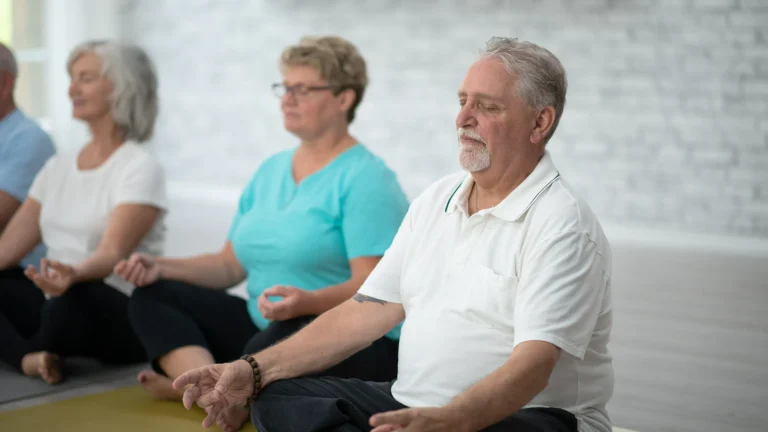
Les personnes âgées peuvent pratiquer efficacement en étant assises dans un fauteuil confortable, allongées, ou même lors d'une promenade tranquille dans un parc ou un jardin de leur quartier.

Pourquoi l'auto-compassion est-elle vitale pendant la phase de transition ?
La retraite suscite souvent des scénarios hypothétiques et des réflexions sur les occasions manquées, ce qui peut engendrer un cycle de ruminations.
La méditation favorise un état de bienveillance envers soi-même, permettant aux retraités de se pardonner leurs erreurs passées et d'accepter pleinement leur nouvelle étape de vie.
En reconnaissant que la retraite est un processus plutôt qu'un événement ponctuel, la pleine conscience aide chacun à se traiter avec la même bienveillance qu'il accorderait à un ami. Ce changement de perspective est la pierre angulaire d'un bien-être émotionnel et d'un bonheur durables.
La méditation soutient les transitions émotionnelles à la retraite
La transition vers la retraite est autant un parcours psychologique que financier ou lié au mode de vie. En intégrant la pleine conscience dans la vie quotidienne, La méditation soutient les transitions émotionnelles à la retraite en fournissant les outils nécessaires pour gérer l'incertitude avec grâce et intention.
Plutôt que de considérer cette étape comme une fin, la méditation vous aide à la percevoir comme un commencement profond, caractérisé par la découverte de soi et la clarté mentale.
S'imprégner du silence de la retraite par la méditation permet de vivre ses années d'or avec présence, détermination et un cœur profondément résilient.
Pour plus d'informations sur les bienfaits pour la santé d'une vie active et attentive aux besoins des personnes âgées, consultez le site web suivant : Portail Santé et Bien-être de l'AARP, qui fournit de nombreuses ressources pour accompagner le processus de vieillissement.
Foire aux questions
Combien de temps faut-il pour constater les résultats de la méditation ?
La plupart des personnes qui pratiquent cette activité constatent une réduction notable de leur niveau de stress après trois à quatre semaines de pratique quotidienne régulière. Cependant, les bienfaits cognitifs à long terme se manifestent généralement davantage après plusieurs mois d'engagement.
Ai-je besoin d'un professeur pour commencer à méditer à la retraite ?
Bien que les applications et les vidéos soient d'excellentes ressources, participer à un cours près de chez vous peut offrir des échanges sociaux précieux. Les séances guidées sont souvent plus faciles pour les débutants qui ont du mal à pratiquer seuls en silence.
La méditation peut-elle aider à atténuer l'anxiété liée au fait de vivre avec un revenu fixe ?
Oui, la pleine conscience aide à gérer la “ mentalité de pénurie ” en nous ancrant dans le moment présent. Elle réduit la tendance à dramatiser l'avenir, permettant ainsi une planification financière plus rationnelle et sereine.
La méditation est-elle une pratique religieuse ?
Bien qu'elle puise ses racines dans diverses traditions spirituelles, la pleine conscience moderne est une technique laïque et fondée sur des preuves. Elle est largement utilisée en milieu clinique pour traiter l'anxiété, la dépression et les douleurs chroniques, indépendamment des croyances religieuses.
++ Les bienfaits de la méditation sur la santé mentale des personnes âgées