anuncios
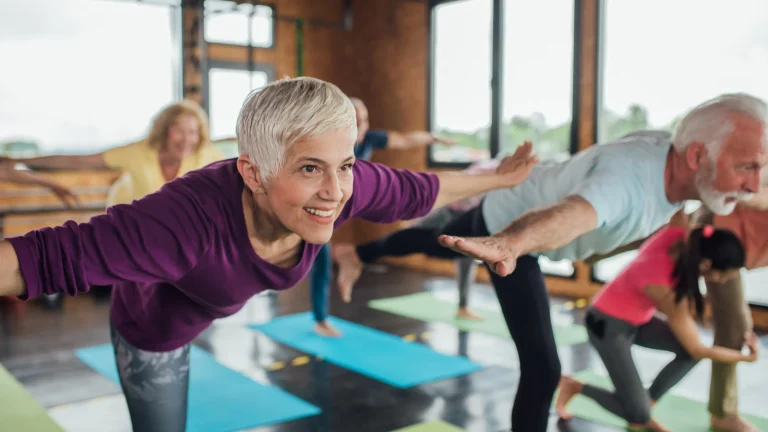
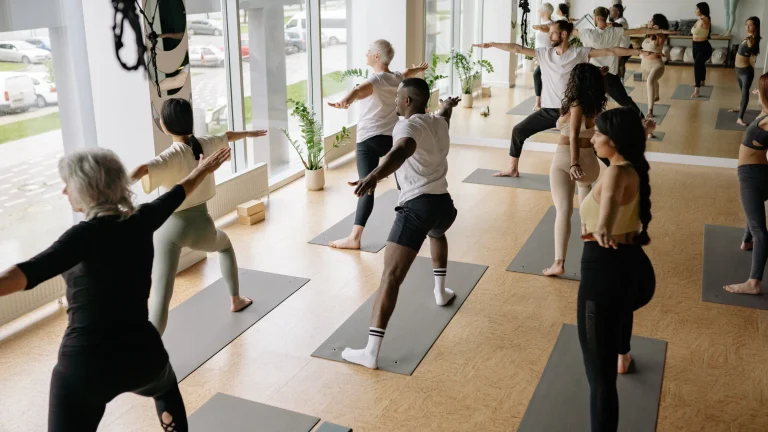
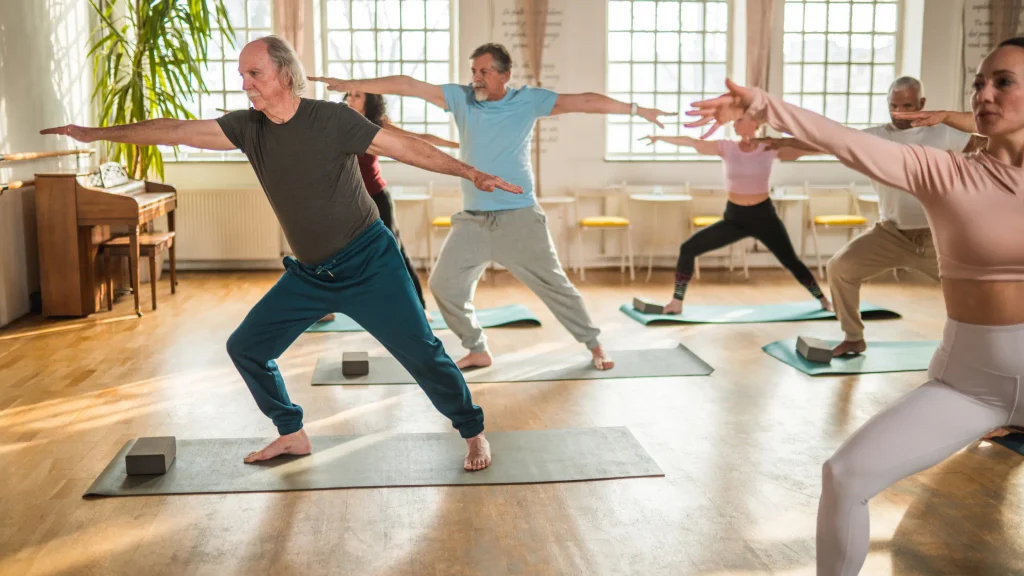
Cuando los adultos mayores explore faster-paced sequences in yoga, they often discover an engaging way to build cardiovascular endurance, preserve functional agility, and maintain metabolic health without high-impact stress on aging joints.
While traditional senior yoga classes emphasize gentle static stretching and slow transitions, incorporating brisk dynamic movement offers distinct physiological rewards.
Navigating quicker sequences requires a deliberate strategy that prioritizes joint safety, alignment control, and heart rate management.
Navigating faster vinyasa style flows or dynamic warm-ups does not mean sacrificing safety.
By applying targeted modifications, utilizing supportive props, and adjusting movement ranges, older practitioners can experience the invigorating benefits of faster movement while protecting their joints and staying well within safe physical limits.
Conclusiones clave
- Moving through dynamic yoga sequences at a brisk pace elevates heart rate and improves cardiovascular conditioning without high-impact joint strain.
- Transition speed should always respect joint control, avoiding rapid twisting or hyperextension of the spinal column and weight-bearing joints.
- Prop adjustments, such as using a sturdy chair or supportive blocks, allow seniors to maintain momentum while ensuring balance stability.
- Hydration, breath synchronization, and rate of perceived exertion (RPE) monitoring are vital tools for preventing overexertion during faster flows.
- Consulting a healthcare provider or a specialized geriatric yoga instructor ensures that tempo increases match individual physical capability.
Understanding the Intent and Benefits of Dynamic Movement for Older Adults
The primary intent of integrating quicker movement patterns into senior fitness routines is functional vitality.
As body composition and joint mobility shift over time, preserving dynamic balance becomes crucial for daily independence.
Rapid reactions are often required in real life, whether stepping over an obstacle on a sidewalk or recovering from an unexpected slip.
Dynamic yoga sequences challenge muscle recruitment patterns differently than static holds. Fast-paced movement engages type II fast-twitch muscle fibers, which naturally decline with age if not deliberately exercised.
Stimulating these fibers through controlled dynamic motion improves coordination and neuromuscular responsiveness.
Furthermore, dynamic flows offer metabolic and circulatory benefits.
Sweeping arms overhead, rising from low to high stances, and continuous postural shifts demand increased oxygen delivery.
Research from organizations such as the Institutos Nacionales de Salud highlights how regular physical activity and aerobic conditioning support healthy aging and long-term joint function.
This sustained activity gently pushes the heart rate into a light-to-moderate aerobic zone, supporting cardiovascular resilience.
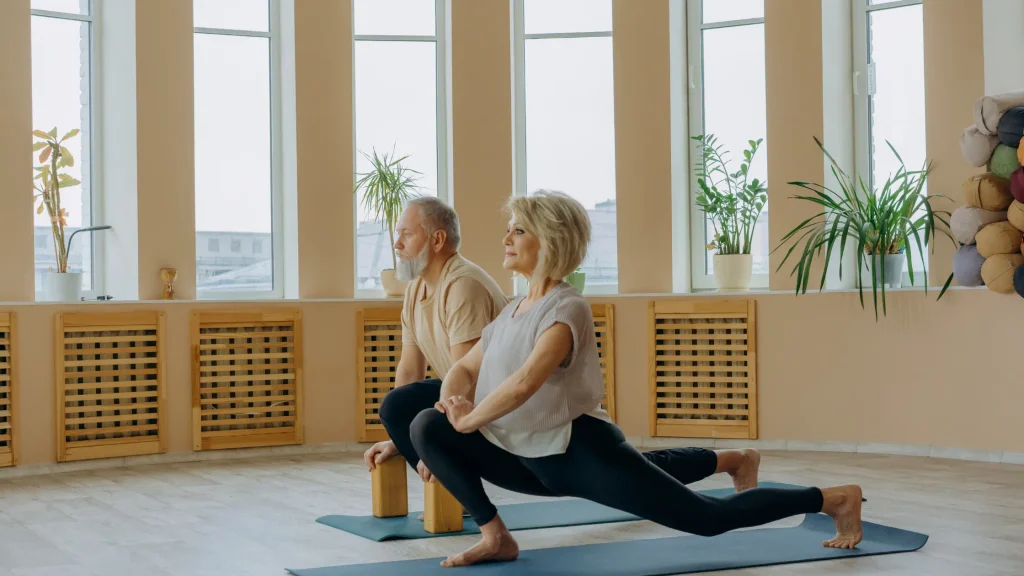
Primary Safety Considerations Before Increasing Vinyasa Tempo
Increasing movement speed introduces inertia and kinetic force, which can increase risk if foundational alignment is compromised.
Before attempting accelerated sequences, seniors should evaluate several physical factors to ensure safety.
Joint Integrity and Spinal Health
Speed amplifies pressure on joints. Moving too quickly into spinal flexion, rotation, or deep knee bending can lead to strain.
Practitioners with osteoporosis, severe osteoarthritis, or spinal stenosis must avoid rapid, uncontrolled twisting or deep forward bends.
++ Fortalece la parte inferior del cuerpo con yoga para adultos mayores en casa.
Movements should emphasize axial elongation—keeping the spine tall and supported—rather than exaggerated bending.
Balance Control and Fall Prevention
Speed can degrade proprioceptive awareness. When moving quickly between poses, balance can become unsteady.
Seniors should establish baseline balance using static poses before attempting fluid transitions.
Leer más: Fomentar la memoria verbal mediante la práctica de yoga para personas mayores
Utilizing wall support or a fixed chair provides immediate feedback and safety during momentum changes.
Blood Pressure Regulation and Dizziness
Rapid changes in head position—such as moving quickly from a standing forward fold to an upright stance—can trigger orthostatic hypotension, a temporary drop in blood pressure that causes lightheadedness.
In faster-paced sequences designed for seniors, head movements should remain above or level with the heart, eliminating deep inversion drops.
Strategic Modifications for Accelerating Yoga Sequences
Pacing adjustments must be purposeful rather than aggressive. Speed in senior yoga is relative; it means moving with rhythmic fluidity rather than frantic rapidness.
1. Shorten the Range of Motion
To move faster safely, reduce the depth of each posture. Instead of dropping into a deep lunge, take a shallow stride.
Rather than reaching fully to the floor in a side stretch, place a hand on the thigh or a chair seat.
++ Practica la reflexión no verbal con la meditación matutina cada día.
A shorter range of motion allows muscles to contract and stabilize quickly without overstretching ligaments.
2. Utilize Chair-Assisted Dynamic Flows
Chairs are dynamic props that enable continuous movement without balance anxiety.
Seated sun salutations allow practitioners to cycle through arm sweeps, leg lifts, and torso extensions at an invigorating tempo while the pelvis remains securely grounded.
3. Emphasize Rhythmic Breathing Over Deep Holds
In slow yoga, poses are often held for five to ten breath cycles. In faster sequences, move on a single inhalation or exhalation.
Inhale to lift the heart and sweep the arms upward; exhale to return to a neutral stance.
Matching motion to rhythmic breathing maintains steady pacing and prevents breath-holding, which can elevate blood pressure.
Comparative Overview: Traditional Pacing vs. Accelerated Senior Sequences
Understanding how faster sequences differ from standard gentle yoga helps practitioners choose the right approach for their daily energy and physical needs.
| Característica | Standard Gentle Senior Yoga | Accelerated / Faster-Paced Senior Yoga |
| Objetivo principal | Flexibility, joint decompression, relaxation | Cardiovascular conditioning, muscle responsiveness, agility |
| Movement Tempo | Slow, deliberate holds (30–60 seconds per pose) | Fluid, breath-synchronized transitions (1–2 seconds per move) |
| Heart Rate Impact | Low; remains near resting heart rate | Light-to-moderate elevation within safe aerobic zones |
| Balance Demands | Static balance holds with ample setup time | Dynamic balance adjustments during posture transitions |
| Prop Utilization | Used for resting support and passive stretching | Used to maintain stability during active movement |
| Risk Profile | Minimal risk; hyper-flexibility strain if unmonitored | Moderate risk if form collapses due to momentum |
Essential Rules for Managing Exertion and Pacing
Self-regulation is the most critical skill when practicing accelerated yoga flows. Older adults should employ simple monitoring techniques to ensure workout intensity remains appropriate.
First, utilize the Rate of Perceived Exertion (RPE) scale, ranging from 1 to 10. Faster yoga flows for seniors should aim for an RPE of 3 to 5—a level described as light to moderate exertion where breathing is elevated but speaking in full sentences remains easy.
If breathing becomes ragged or talking becomes difficult, tempo must be reduced immediately.
Second, avoid sudden stops. If a sequence feels too fast, gradually slow down the motion over two or three breath cycles rather than coming to an immediate standstill, allowing the cardiovascular system to adjust smoothly.
Finally, maintain constant hydration. Dynamic movement increases metabolic heat generation.
Keeping water nearby and taking periodic hydration breaks ensures muscular function remains fluid and prevents fatigue-related missteps.
For comprehensive guidelines on safe exercise intensity and fall prevention in older adults, consult physical activity recommendations from Publicaciones de salud de Harvard.
Sample Safe Accelerated Sequence Structure
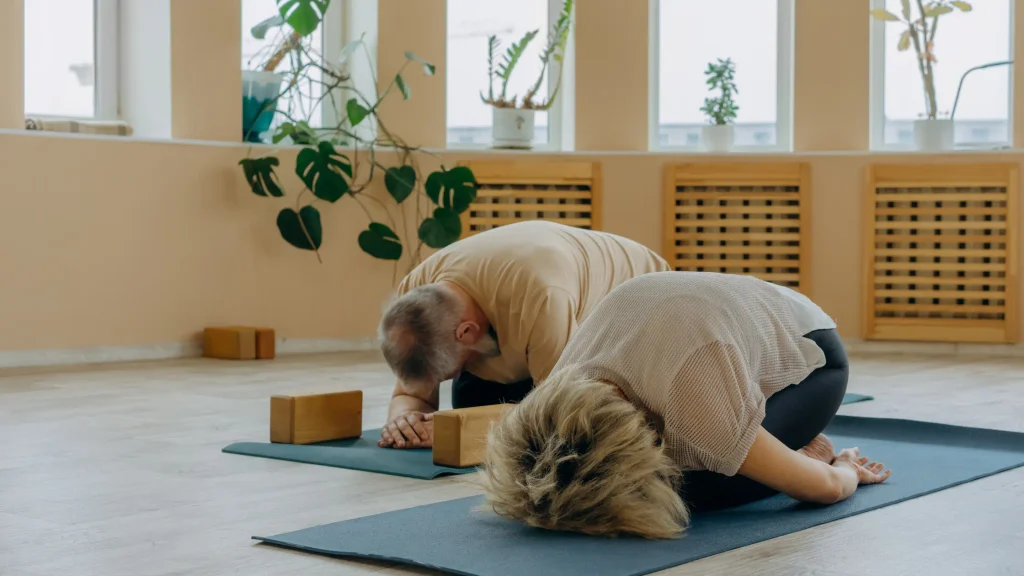
A well-structured faster sequence should follow a progressive arc: warm-up, active flow, and cool-down.
Phase 1: Dynamic Seated Warm-Up (3–5 Minutes)
Begin seated comfortably in a sturdy armless chair with feet flat on the floor.
- Inhale, sweep both arms out to the sides and up toward the ceiling.
- Exhale, lower arms back to the thighs.
- Repeat this arm sweep rhythmically for eight cycles, focusing on matching arm movement to the length of the breath.
- Add gentle pedal movement with the feet, lifting heels alternately to warm up the calf muscles and ankles.
Phase 2: Standing Supported Flow (5–7 Minutes)
Stand facing the back of a sturdy chair, placing both hands lightly on the top rail for balance.
Step-Back Flow: Inhale, lift the chest; exhale, step the right foot back into a shallow high lunge. Inhale, step the right foot back to center.
Exhale, step the left foot back to a shallow lunge. Continue alternating sides at a steady, marching tempo for 10 repetitions per leg.
Side-Leg Sweeps: Maintain light hand support on the chair. Inhale, sweep the right leg out to the side; exhale, return to center.
Alternate legs rhythmically for 12 total repetitions to engage the hip abductors and lateral stabilizers.
Phase 3: Cool-Down and Centering (3 Minutes)
Return to a seated position in the chair.
- Close eyes or soften gaze forward.
- Take slow, deep abdominal breaths, extending the length of the exhalation to gently bring the heart rate back to resting levels.
- Finish with gentle neck rolls and shoulder shrugs to release any residual tension in the upper body.
Preguntas frecuentes
Can seniors with arthritis participate in faster-paced yoga?
Yes, provided the joints are adequately warmed up and the range of motion is kept shallow.
Moving dynamically can actually help lubricate arthritic joints by encouraging synovial fluid circulation. However, if sharp or pinching pain occurs, the practitioner should slow down or return to static poses immediately.
How often should older adults practice dynamic yoga flows?
Integrating faster-paced sequences two to three times per week provides excellent cardiovascular and functional agility benefits.
Balancing these sessions with slower flexibility or rest days ensures adequate muscular recovery and prevents overuse injuries.
Is chair support necessary for faster sequences?
Chair support is strongly recommended, especially when first transitioning to faster movement.
Using a chair eliminates the fear of falling, allowing seniors to focus entirely on rhythmic breathing, cardiovascular effort, and posture alignment.
How does faster yoga compare to walking for senior fitness?
Both activities offer valuable cardiovascular benefits.
Walking primarily works the lower body in a linear plane, whereas dynamic yoga engages the entire body across multiple planes of movement, improving lateral balance, shoulder mobility, and core stability alongside aerobic conditioning.
++ Yoga for Seniors: Improve Flexibility, Strength, and Overall Well-Being
++ Yoga for seniors: 5 modified poses from the comfort of home