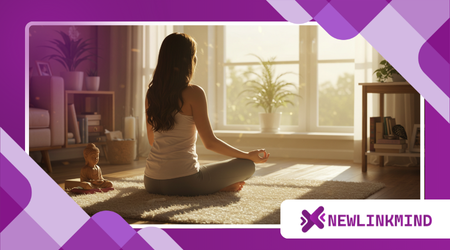
What would your day feel like if it didn’t begin in a rush?
For many people, mornings bring tension before the sun even rises. Alarms go off. The brain starts racing. The body follows, often without checking in. That constant urgency becomes the default. But the truth is, you don’t need more hours in the day — you need a better beginning.
A more peaceful morning meditation routine doesn’t just shape the first minutes. It recalibrates everything that comes after.
Peace isn’t something you stumble into. It’s something you practice — gently, consistently, and without judgment. These three steps aren’t about doing more.
They’re about doing less, with more presence. Less pressure, more space. And from that space, you begin not just to function, but to feel whole before the world demands anything from you.
Step 1: Begin Before the Noise Begins
The most powerful part of your morning is the part no one else has touched yet. That quiet in-between — where sleep fades and thought returns — is where presence can enter unnoticed.
That’s why the first step to building a peaceful morning meditation routine is reclaiming that early moment, before external noise takes hold.
It doesn’t require waking up an hour earlier or sitting in perfect stillness. It requires a pause. A breath. A few minutes where the phone stays untouched, and you stay close to yourself. You don’t need to silence your thoughts. You just need to meet them before they carry you away.
Try sitting at the edge of the bed, spine upright, feet grounded. Close your eyes. Feel the weight of your body. Listen to the inhale and the exhale — not to control, just to notice. This isn’t a performance. It’s a return. A way to enter the day on your own terms.
The earlier you build this rhythm, the more you train your nervous system to associate morning with safety — not urgency. And when the mind starts in safety, clarity follows. It’s not about avoiding what the day will bring. It’s about choosing how you’ll meet it.
Step 2: Build a Simple, Repeatable Sequence
Once you’ve carved out that quiet, the next step is to create a structure that invites you back — day after day. This isn’t about variety. It’s about rhythm. The most peaceful morning meditation routine isn’t the most exciting. It’s the one you can rely on, even when you’re tired, anxious, or uninspired.
Start with consistency in duration. Five to ten minutes is enough. What matters is showing up fully for those minutes. Use the same location if you can — a chair by the window, a mat near your bed, a quiet corner. Let your body recognize the space as safe, familiar, yours.
Choose one technique and stay with it. Breath-focused meditation is a gentle place to start. Close your eyes. Inhale for a count of four. Exhale for six. If counting distracts you, simply follow the natural rhythm of your breath. If thoughts arise, notice them and come back — again and again. That coming back is the practice.
You don’t need a teacher to begin. You don’t need to understand every method. You just need repetition, done with kindness. Over time, that repetition becomes grounding — not because it’s complex, but because it’s yours.
Try This Foundational Sequence
Sit or lie down comfortably, close your eyes, and take three full breaths. On the next inhale, gently say “I’m here.” On the exhale, say “Right now.” Repeat for five minutes. Then stay still for one more minute in silence, simply observing.
This kind of mantra-based presence keeps the mind anchored without needing effort. It’s a soft place to land — and a strong way to start the day.
Read also: How Workplace Meditation Boosts Focus and Productivity
Step 3: Transition Gently into the Day
A peaceful meditation loses impact if you launch straight into chaos. The final step is often the one most overlooked: how you re-enter the world. Your peaceful morning meditation routine should end with care, not abrupt movement. That transition is part of the practice.
When your session ends, don’t rush to stand. Open your eyes slowly. Stretch gently. Notice how your body feels now compared to when you began. This reflection deepens awareness and reinforces the benefits you just cultivated.
Next, do one simple action that carries the energy of your practice forward. Maybe it’s making your tea without distraction. Maybe it’s brushing your teeth while staying mindful of your breath. Maybe it’s looking out the window for one full minute before touching your phone.
These micro-transitions bridge the gap between stillness and movement. They remind the body that you’re still allowed to move slowly, even as the day speeds up. That memory becomes part of your nervous system. And with time, that kind of memory becomes a habit — one that holds you steady no matter how loud the world gets.
Conclusion: Let Your Mornings Begin with You
You don’t need to master meditation to create a peaceful start. You only need to choose yourself — early, gently, and without apology.
The world will ask for your energy. Deadlines, messages, conversations. That won’t change. But how you show up for those moments can.
When you build a peaceful morning meditation routine, you give your nervous system something it rarely gets: permission to slow down before speeding up.
You train your mind to return to presence before it gets pulled by pressure. And over time, that quiet commitment shapes not just your mornings — but your entire life.
No one will hand you peace. But you can choose it. One morning at a time. One breath at a time. And that choice, made consistently, is what transforms the ordinary into the meaningful. Let that be your new beginning. Every day.
FAQ About Building a Peaceful Morning Meditation Routine
Do I have to meditate at the same time every morning?
No, but consistency helps. Choosing a regular window — even within 30 minutes — signals your body that this is a safe and expected part of the day. It reduces resistance.
What if I don’t feel calm during the meditation?
That’s normal. Calm isn’t the goal — presence is. You might feel distracted, restless, or tired. The practice is about noticing those states without reacting to them.
Can I lie down instead of sitting?
Yes. If sitting causes pain or strain, lying down is absolutely valid. The key is staying awake and intentional. Find a posture that supports awareness, not sleep.
What’s better: silence or guided sessions?
Both work. Silence allows you to listen inward. Guided sessions offer support and structure. Try both and see what helps you return to your breath with the most ease.
How long before I start noticing results?
Some people feel shifts immediately. For others, it takes weeks. What matters is building consistency. The benefit often shows in how you react to the rest of your day — not during the session itself.
Leave a Reply
You must be logged in to post a comment.