advertisements
Joint stiffness, sticky transitions, and restricted mobility often turn simple daily tasks into frustrating challenges.
When you attempt to create smoother movement patterns, yoga practiced at home offers a accessible, highly effective pathway toward fluid motion.
By focusing on fascia hydration, joint articulation, and nervous system regulation, targeted yoga flows bridge the gap between static flexibility and dynamic, real-world agility.
Key Takeaways
- Understanding how home yoga rewires the nervous system to eliminate jerky movements.
- Essential biomechanical principles behind fluid joint articulation and fascia health.
- Step-by-step at-home movement routines targeting common restriction points like hips and shoulders.
- Modern tracking methods to measure motor control improvements over time.
What Does It Mean to Create Smoother Movement Patterns?
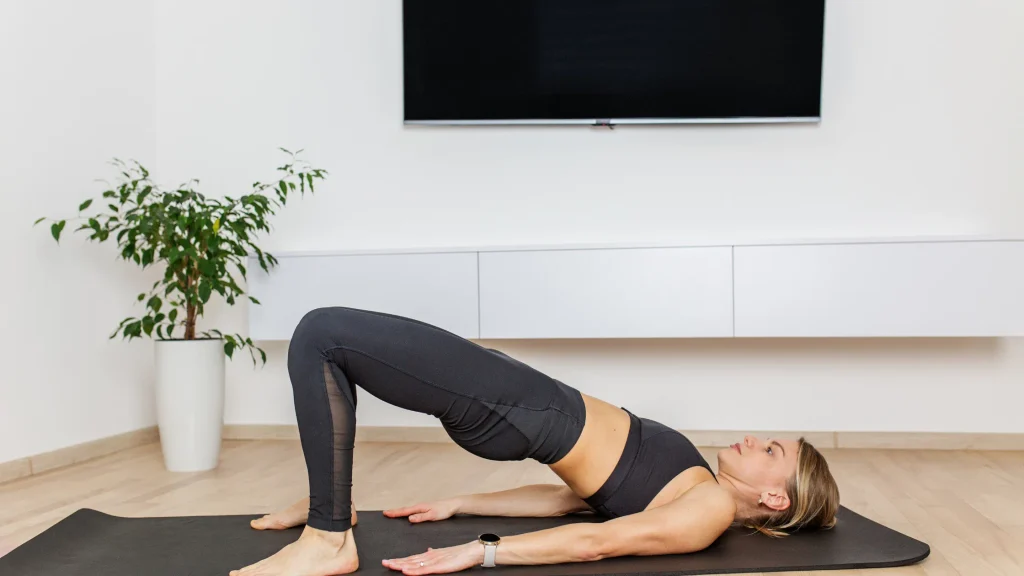
Movement smoothness reflects how efficiently the central nervous system coordinates muscle contractions and joint accelerations.
Smooth motion eliminates unnecessary acceleration spikes, reducing joint wear and energy expenditure.
When muscle groups co-contract unnecessarily due to stress or poor postural habits, movement becomes rigid.
Yoga disrupts these inefficient motor loops by pairing slow, deliberate articular control with breath-regulated feedback.
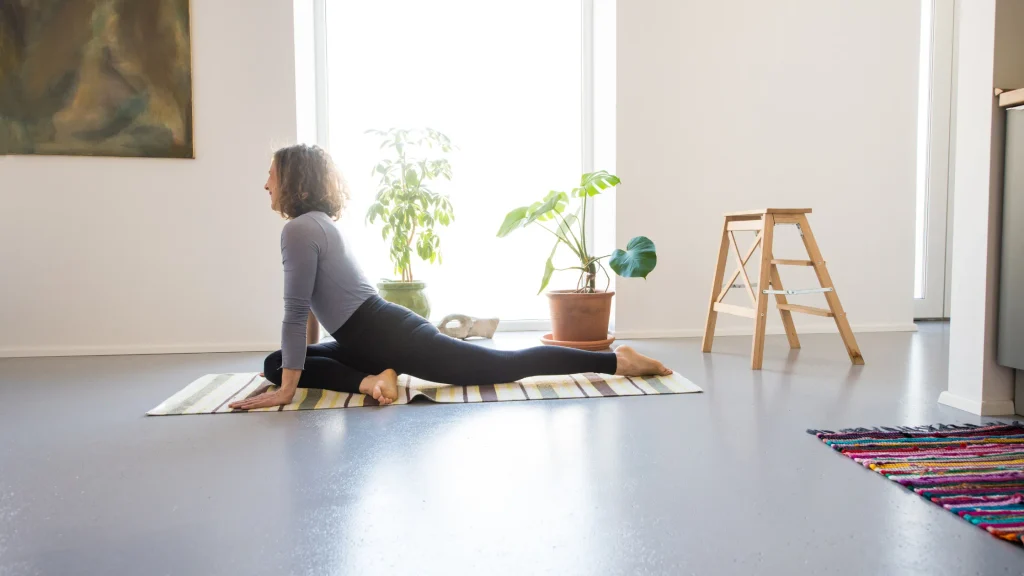
Practicing at home creates a low-stress environment where your nervous system feels safe enough to release protective muscle guarding.
This safe space accelerates motor learning faster than high-intensity gym settings.
How Does Home Yoga Improve Motor Control and Fluidity?
Yoga enhances proprioception—your brain’s internal map of where your body exists in space.
Dedicated mat work stimulates mechanoreceptors within your fascia and joint capsules, sending high-fidelity sensory data back to the brain.
Dynamic yoga sequences emphasize controlled transitions rather than static end-range holding.
Moving slowly between poses forces deep stabilizer muscles to engage dynamically throughout the entire range of motion.
Consistent home practice allows you to explore these subtle biomechanical shifts without rushing.
According to comprehensive movement research published by the National Institutes of Health, regular mind-body practices significantly enhance balance, posture, and systemic neuromuscular control.
What Is the Biomechanics Behind Movement Fluidity?
| Biomechanical Factor | Impact on Rigid Movement | How Home Yoga Restores Smoothness |
| Fascial Hydration | Adhesions create sticky friction during joint sliding. | Multi-planar gliding rehydrates extracellular matrix tissue. |
| Motor Unit Rec. | Jerky, all-or-nothing muscle firing patterns. | Slow tempo trains subtle, graded muscle recruitment. |
| Joint Centration | Misaligned joints limit full, smooth articulation. | Active isometric holds center the bone within the joint socket. |
| Parasympathetic State | Elevated tone causes protective resting muscle tension. | Diaphragmatic breathing lowers involuntary muscle guarding. |
How Can You Build an At-Home Flow for Fluid Transitions?
Establishing a fluid movement routine requires structured sequencing that prioritizes dynamic mobility over passive stretching.
++ Restore Everyday Movement Quality With Yoga at Home
Follow this progressive sequence three times weekly to maximize motor skill acquisition.
Phase 1: Dynamic Spinal Articulation
Begin on hands and knees with segmented Cat-Cow movements.
Instead of moving your entire spine as a single block, initiate the wave from your tailbone, moving sequentially through each vertebra until reaching the neck. Repeat for 90 seconds alongside deep diaphragmatic breathing.
Read more: What I Learned from Doing Yoga at Home Every Day for a Month
Phase 2: Multi-Planar Hip Opening
Transition into a low lunge with your back knee resting on the mat. Shift your weight forward and backward through subtle micro-adjustments, then introduce gentle lateral hip circles.
This multi-directional loading lubricates the acetabular joint and releases tight hip flexors.
Phase 3: Controlled Kinetic Transitions
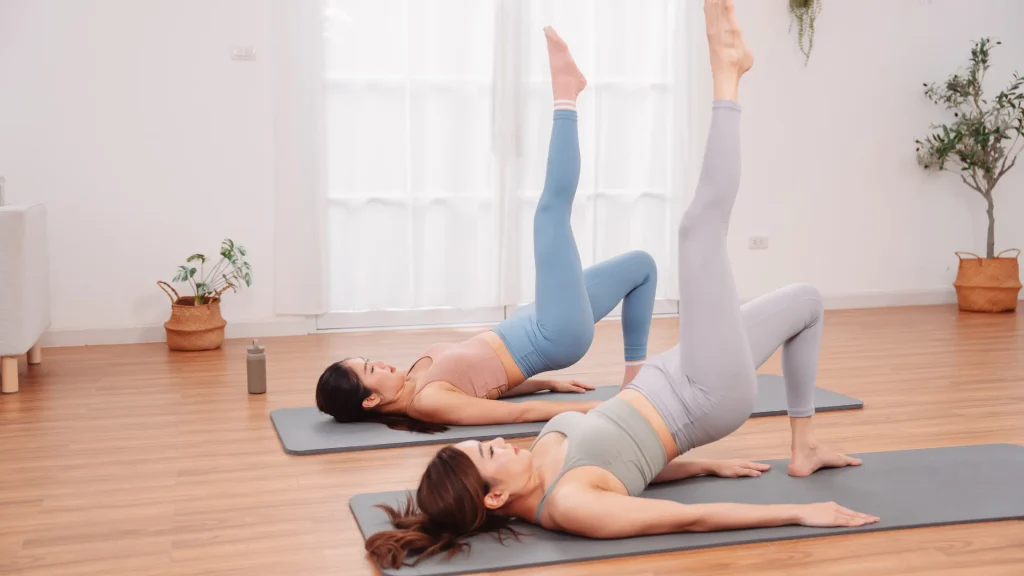
Flow smoothly between Downward-Facing Dog and a Controlled Plank.
++ Improve Recovery After Walking With Yoga for Seniors Daily
Focus on rolling through the spine, articulating each spinal segment rather than snapping straight into position. Slow down every transition to a four-second count to build dynamic eccentric strength.
Which Common Mistakes Inhibit Smooth Movement at Home?
- Moving too quickly through transition zones between primary poses.
- Holding your breath during complex rotational movements.
- Pushing past sharp joint pinching instead of backing off to find clean movement paths.
- Neglecting active end-range muscle engagement during deep stretches.
- Practicing on slippery surfaces that force unnecessary global muscle gripping.
Neural Rewiring Through Slow Motion
Slow, intentional yoga practice trains your central nervous system to coordinate muscle contractions more efficiently.
Moving deliberately eliminates sudden acceleration spikes that disrupt fluid motion.
Practicing at home creates a low-stress environment where your body feels secure, allowing protective muscle tension to release.
Over time, these controlled movements build high-fidelity sensory feedback, allowing your brain to execute everyday actions with far greater precision, dynamic balance, and effortless grace.
Fascial Hydration and Joint Mobility
Smooth movement relies heavily on healthy, flexible connective tissue rather than isolated muscle strength.
Static lifestyles cause collagen fibers within fascia to bind together, creating friction and restricted mobility during daily activities.
Multi-planar yoga flows gently stretch and slide these fascial layers, driving fluid back into extracellular tissue matrices.
Rehydrating connective tissue restores natural joint lubrication, eliminates sticky movement transitions, and preserves joint health across a full, painless range of motion.
Diaphragmatic Breathing and Muscle Recovery
Controlled breathing directly regulates resting muscle tone through autonomic nervous system signaling.
High stress or improper movement habits keep stabilizer muscles unnecessarily tight, resulting in rigid, jerky kinetic transitions.
Synchronizing movement with deep diaphragmatic breaths signals safety to the brain, suppressing involuntary muscle guarding.
Lowering systemic muscle tension clears room for subtle stabilizer engagement, allowing major muscle groups to fire smoothly without fighting chronic, counterproductive tightness throughout daily movement routines.
How Do You Measure Progress in Movement Smoothness?
Gauging neuromuscular improvement requires tracking quality rather than raw intensity or extra weight.
Pay close attention to how your joints feel during first-thing-in-the-morning movements or long walks.
Video recording your home sessions once every two weeks provides objective feedback.
Look for smooth, continuous transitions in your playback without sudden drops, shakes, or holds during complex flows.
Long-term mobility gains directly reflect consistent, mindful practice habits.
Guidance on physical activity standards from the Centers for Disease Control and Prevention, underscores that regular neuromuscular conditioning plays a vital role in preventing movement dysfunction and preserving lifelong mobility.
Frequently Asked Questions
How often should I practice yoga at home to see smoother movement?
Practicing short 15-to-20-minute sessions four to five times weekly yields better motor-learning results than one long session per week. Consistent frequency reinforces neural pathways faster than sporadic volume.
Can yoga fix jerky movements caused by lifting heavy weights?
Yes. Weightlifting often develops high global tension, which can limit subtle motor control. Integrating fluid yoga flows restores tissue slide-and-glide mechanics without sacrificing muscle strength.
Do I need expensive props to improve movement patterns at home?
No elaborate equipment is required. A non-slip yoga mat, two foam blocks, and a comfortable strap offer all the support needed to modify poses and explore clean movement paths safely.
++ Understanding Yoga Poses Through Functional Movement Patterns